BELIEFS

Every life is driven by something. Motivation and discipline get the credit, but beneath your habits, decisions, relationships, and direction lies something deeper:

Your beliefs.

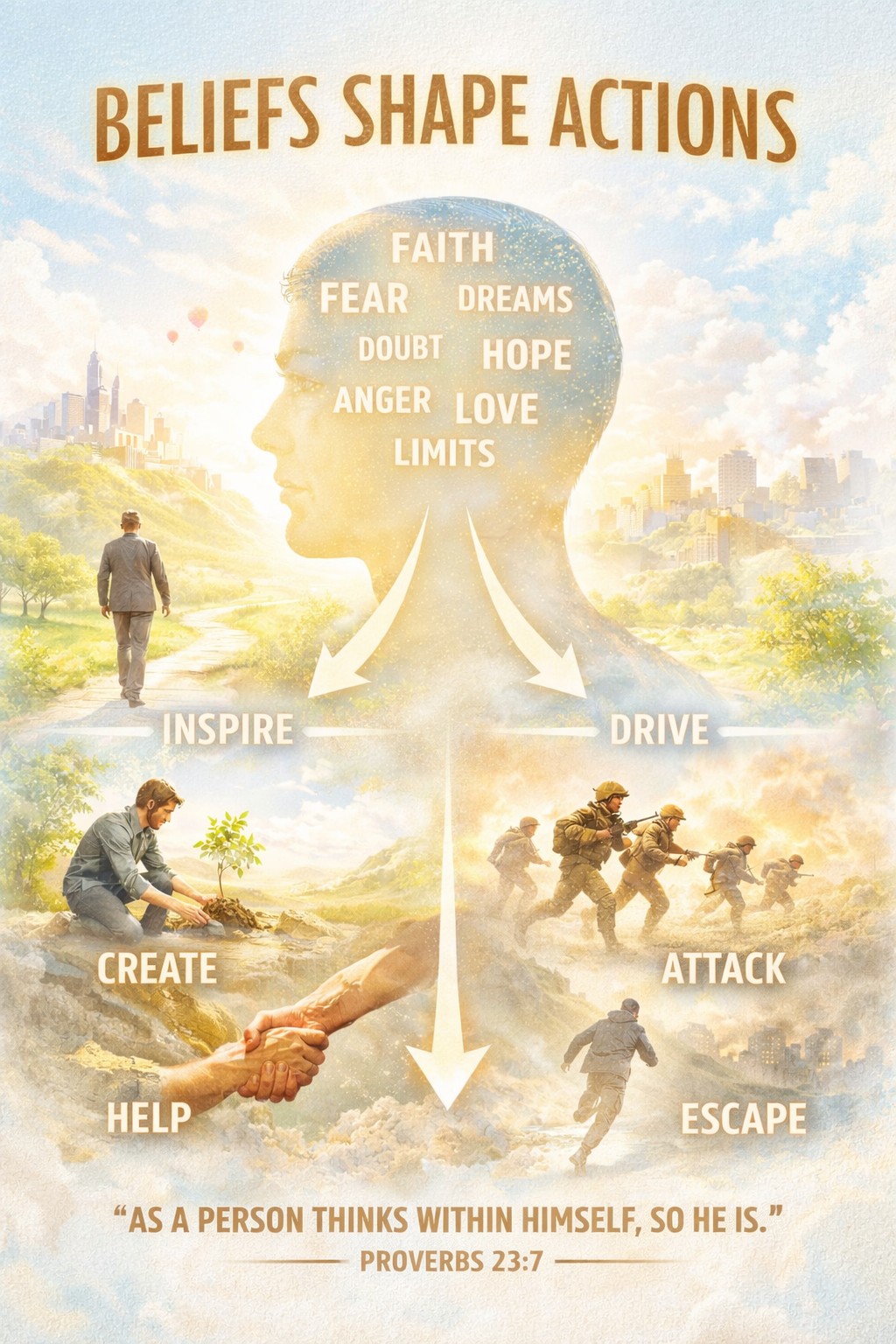
A thought is harmless until you adopt it as true. Once you do, it becomes a belief—and beliefs quietly shape the quality and trajectory of your life.

Belief Drives Behavior

Consider a publishing lesson.

J.K. Rowling’s first book launched in the U.K. as Harry Potter and the Philosopher’s Stone. When preparing it for the U.S., publishers believed American kids would find “philosopher” dull or academic. So they changed one word:

Harry Potter and the Sorcerer’s Stone.

Same story. Same magic. Different belief.

The result? Explosive success in the U.S.

Nothing changed but perception—and perception drove action.

We don’t act on what’s true.
We act on what we believe is true.

Belief Can Reshape History

Belief doesn’t just guide individuals—it moves nations.

In 1967, during the buildup to the Six-Day War, Egypt believed Israel was preparing to attack. Israel believed Egypt was mobilizing to strike first. Neither side had full confirmation. Both acted on belief.

Israel launched a preemptive strike. War followed. The region was reshaped—not by verified facts, but by perceived intent.

Belief can preserve peace or ignite conflict.

Belief Organizes Life

There’s an old song that says:

I believe God,
I believe God,
I believe God just as He said.

What you believe about God organizes everything else—your spiritual posture, mental framework, emotional responses, relationships, and decisions.

The same is true socially. Your beliefs about leadership, loyalty, communication, and trust shape how you show up at home, at work, and in your community. Two people can experience the same event and walk away with different conclusions—not because of the event, but because of the beliefs they brought with them.

Why We Hold On to Beliefs

We don’t cling to beliefs because they’re true. We cling to them because they’re familiar—or useful.

Whether we change often depends on:

  • who is asking us to change
  • how much we trust them
  • whether we believe the change is worth the cost

Advice from Jeff Bezos lands differently than advice from a stranger. A request from someone you love carries more weight than one from a coworker.

Belief is relational. Emotional. Contextual.

Where Beliefs Come From

Beliefs are shaped by upbringing, environment, influencers, trauma, success, fear, goals, and perceived limitations. They don’t appear out of nowhere—they’re formed over time.

And that’s the good news.

Beliefs can be examined.
Beliefs can be challenged.
Beliefs can be upgraded.

Choose Belief on Purpose

If beliefs shape destiny, they deserve intention.

Ask yourself:

  • Does this belief expand me or limit me?
  • Did I choose it—or inherit it?
  • Who would I become if I believed better?

Your life will rise—or fall—to the level of your beliefs.

Choose wisely.

“As a person thinks within himself, so he is.”
Proverbs 23:7, Christian Standard Bible (CSB)

No Muscle

Just say no.”

It’s a phrase indelibly linked to public service campaigns—from Nancy Reagan’s stern warning against drug use to Michelle Obama’s encouragement to young people. It’s a simple, decisive command, and it aims at the big, life-altering decisions.

But I want to offer an insight: the true power of “no” isn’t reserved only for these momentous, life-or-death choices. Its most profound impact is felt in the daily, small decisions we face in our personal and professional lives. These are the choices we often dismiss as insignificant, yet they are the silent architects of our trajectory.

The Tyranny of the Small “Yes”

We are wired to be agreeable. To be team players. To be responsive—to texts, emails, requests for “just 15 minutes” of our time. We fear the awkward silence, the momentary disappointment, or the potential missed opportunity that a “no” might bring.

So, we say yes.

  • Yes, to the extra, non-essential task at work.
  • Yes, to the social engagement we dread.
  • Yes, to the distracting notification on our phone.
  • Yes, to the small detour that is miles off our personal road map.

Each “yes” on a small, non-essential item is a micro-withdrawal from our most precious accounts: time, energy, and focus. Individually, they feel harmless. But stacked up over weeks and months, these small “yeses” create a crushing weight. They dilute our effort, erode our momentum, and ultimately, can lead us down a catastrophic trajectory where we are busy but unproductive, exhausted but unfulfilled, and our brand—our identity and what we stand for—is blurred by a thousand compromises.

Your “No” Muscle: A Necessary Discipline

This is where the concept of the “No” Muscle comes in.

To say “no” when it truly matters—to a toxic influence, a professional over-commitment, or a habit that drains your soul—requires strength. And like any muscle, that strength must be developed through practice. If you haven’t built the discipline of declining the small, distracting, and non-essential things, you will have no strength—no muscle—to utter that decisive word when the stakes are high.

Practice makes stronger. Start today by recognizing that saying “no” to one thing is saying “yes” to another.

  • Saying no to an unnecessary meeting is saying yes to focused work.
  • Saying no to a distracting notification is saying yes to presence and clarity.
  • Saying no to a request that doesn’t align with your goals is saying yes to integrity and your own mission.

Build that muscle by starting small. Be selective about your time. Guard your energy as your most valuable asset. Recognize that your calendar is not a suggestion box; it is the ledger of your life, and you are the only one who can truly authorize the debits and credits.

The strength to say “no” is not rudeness; it is self-respect. It is not a denial of others; it is an affirmation of self. Start flexing that muscle today, and watch as your trajectory straightens, your energy reserves replenish, and your momentum becomes unstoppable.


A Word of Guidance

The internal discipline required to maintain a focused life is the true work of the heart. The Bible speaks to this vigilance:

“Above all else, guard your heart, for everything you do flows from it.”

(Proverbs 4:23, NIV)

This “guarding” is the active, continuous process of building your “No” Muscle—protecting the source of your thoughts, intentions, and actions from the countless small distractions that seek to drain its vitality.

Why We Sabotage What We Want Most

Understanding the hidden psychology behind self-sabotage and reclaiming your path to growth

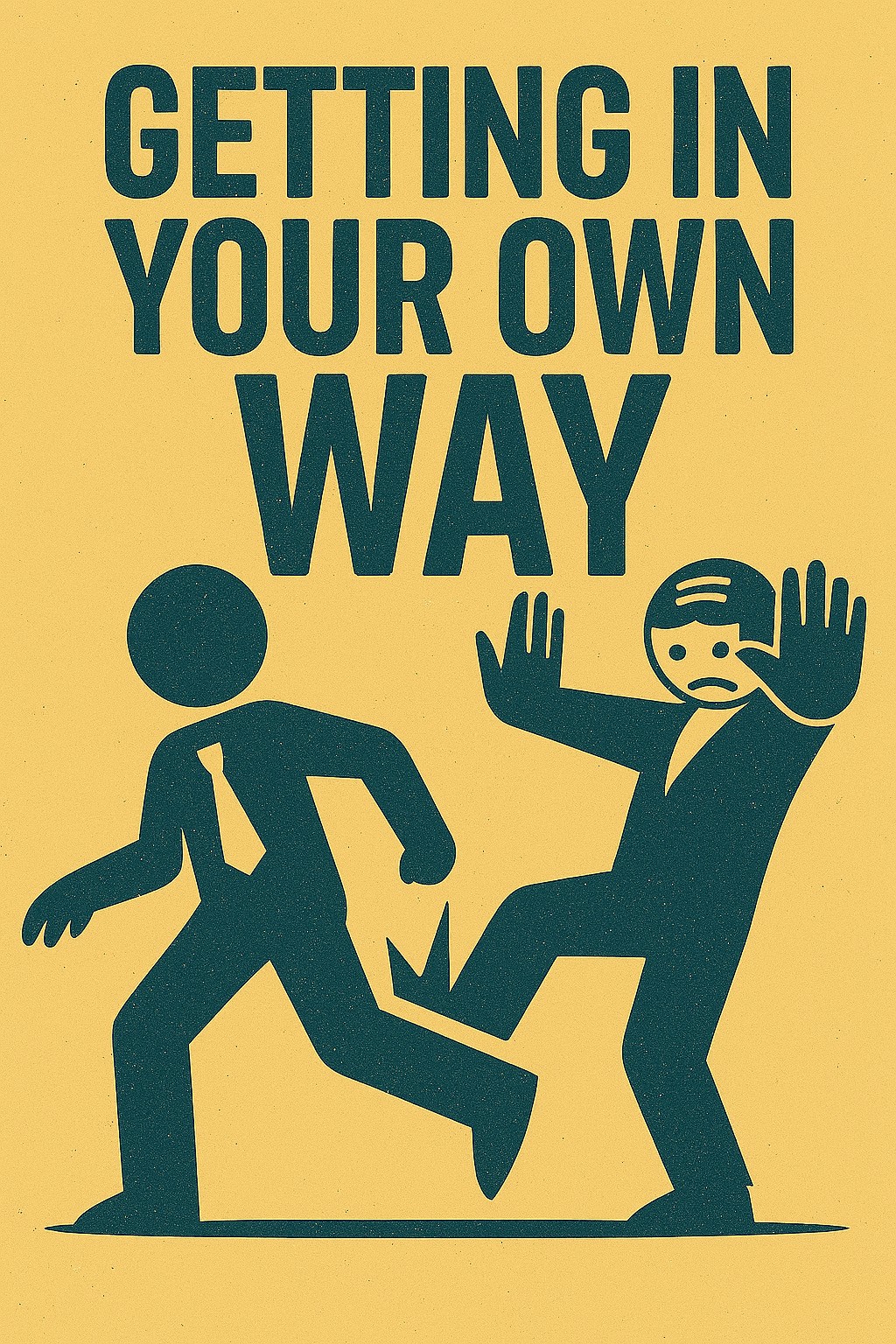
We’ve all been there—setting goals with clarity and conviction, only to find ourselves doing the very things that derail our progress. Whether it’s procrastinating, overspending, or avoiding the hard conversations, self-sabotage feels like a betrayal of our own intentions. But it’s not random. It’s a signal.

Here’s what’s really going on beneath the surface—and how to break the cycle.

1. Fear of Success and Change

Progress demands transformation. It asks us to shed old identities and step into new ones. But change—even good change—can feel threatening. Sabotage is often a way of clinging to the familiar.

2. Imposter Syndrome

When we don’t believe we’re worthy of the success we’re pursuing, we unconsciously act in ways that confirm that belief. It’s a self-fulfilling prophecy rooted in doubt.

3. Emotional Avoidance

Growth requires discomfort—discipline, vulnerability, effort. Sabotage is often a shortcut to avoid those feelings. It’s easier to scroll, spend, or distract than to face what’s hard.

4. Addiction to Immediate Gratification

Our brains are wired for dopamine. Quick hits of pleasure—junk food, impulse buys, social media—can override long-term goals. Sabotage often feels good in the moment, even if it costs us later.

5. Loyalty to Old Stories

Some of us carry generational or cultural narratives that glorify struggle. Sabotage can be a way of staying loyal to those stories, even when they no longer serve us.

🔄 How to Break the Pattern

  • Name the Emotion: Before you sabotage, pause. Ask: What am I feeling right now? What am I afraid of?
  • Reframe the Identity: Instead of “I always mess up,” try “I’m learning to show up differently.”
  • Create Rituals, Not Just Goals: Habits anchored in meaning are harder to sabotage.
  • Practice Compassion: Sabotage isn’t a sin—it’s a signal. Treat it with curiosity, not shame.

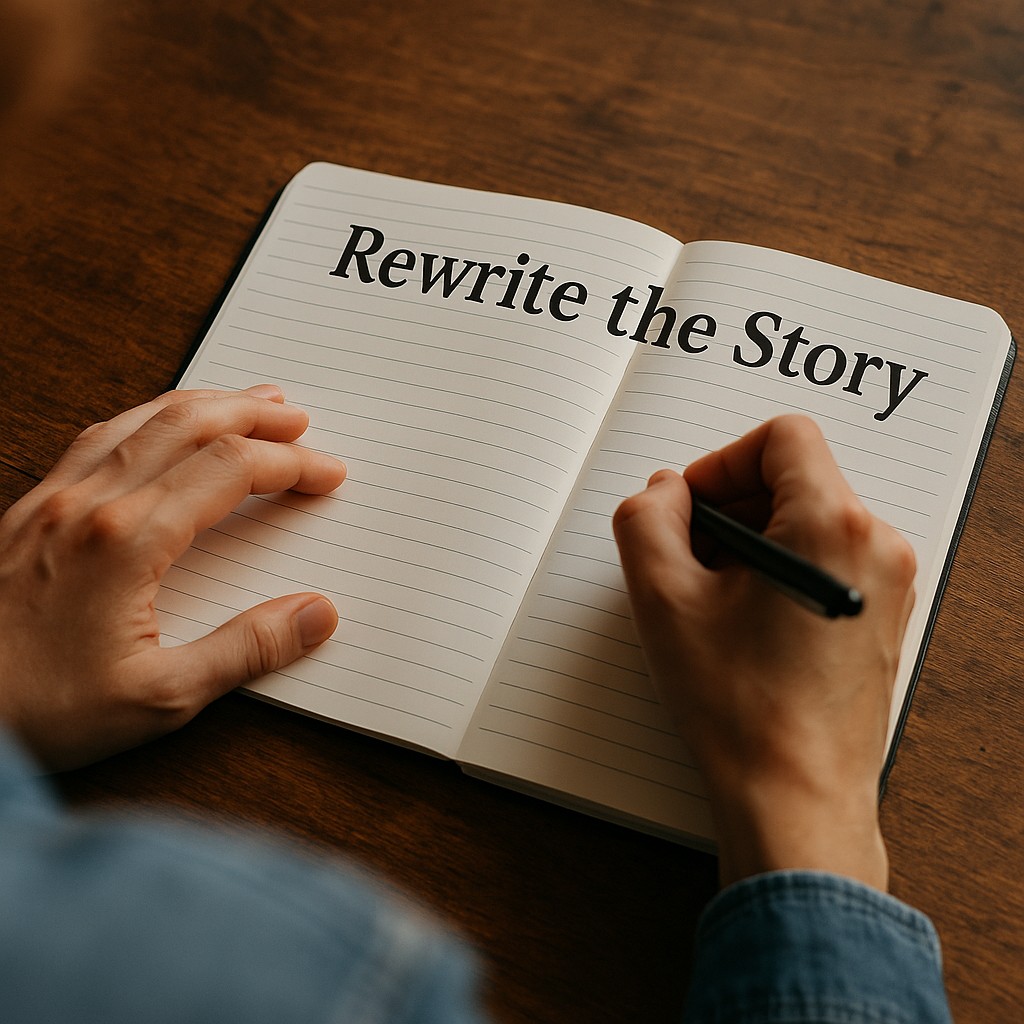
Self-sabotage isn’t proof of failure. It’s proof that something deeper needs healing. When you understand the roots, you can rewrite the story—and reclaim your progress.

“I do not understand what I do. For what I want to do I do not do, but what I hate I do.”

-Romans 7:15 (NIV)

Rewrite the Story

The mind is wired for stories—it’s how we make sense of the world. And like the spread on a lunch buffet, there’s something for every taste: adventure stories, victim stories, hero stories, cautionary tales, or comeback chronicles. We don’t just consume stories from books or Netflix; we absorb them from our homes, the media, our faith communities, and the workplace. But the most influential narratives are the ones we quietly repeat in our own minds.

We become what we believe, and often what we believe comes from the stories we’ve inherited—not necessarily the ones we’ve chosen. Maybe someone told you, “You’re too much,” or “You’re not enough.” Maybe you’ve internalized a story of scarcity, fear, or failure. Without realizing it, those old scripts can shape your present and limit your future.

Let’s name five common types of stories we live by:

  1. The Victim Story“Bad things always happen to me.”
  2. The Martyr Story“I have to sacrifice everything for others.”
  3. The Hero Story“I’ve overcome, and I’ll do it again.”
  4. The Underdog Story“No one believed in me, but I proved them wrong.”
  5. The Stuck Story“This is just the way things are. I can’t change.”

Which one have you been telling yourself? And is it even true?

Tony Robbins emphasizes three life-changing questions we can use to take back authorship of our own story:

  1. What are you going to focus on? – Because what you focus on, you feel.
  2. What does it mean? – You get to assign the meaning to your experiences.
  3. What are you going to do about it? – Change begins with action.

Today, choose one sentence you’ve been telling yourself—just one—and rewrite it.
Instead of: “I’m always behind.”
Try: “I am learning to move at the pace of grace.”

Instead of: “I’m not good enough.”
Try: “I am uniquely equipped to grow into who I’m called to be.”

God didn’t create you to live in bondage to a broken narrative. You’re not stuck with the first draft. You’re invited to co-author a better one—with Him.

“Do not be conformed to this age, but be transformed by the renewing of your mind, so that you may discern what is the good, pleasing, and perfect will of God.”
—Romans 12:2 (CSB)

Beyond the Target

In life, aiming higher than our target can lead to extraordinary outcomes. By setting our sights beyond immediate goals, we open ourselves up to greater success—even if we don’t reach our loftiest aspirations.

The Philosophy of Aiming Higher

Aiming higher taps into our vast potential. It pushes us beyond our comfort zones, unlocking creativity, resilience, and determination. Think of it like reaching for the stars: even if we miss, we’ll still be soaring in the sky, not grounded like those who aim only for the treetops.

Practical Applications

  • Financial Goals: If you aim to earn $20,000 a month, try pushing for $25,000. This will motivate you to explore new opportunities, bringing you closer to or beyond your original goal.
  • Sports and Fitness: Athletes are told to run through the finish line. Aiming beyond the end encourages momentum and better results.
  • Academics and Careers: Students aiming for a 90% grade might aim for 95%. Professionals seeking a promotion could aim for a leadership role. This higher aim fosters growth and achievement.

Examples of Aiming Higher

  • Elon Musk: Musk’s ambitious goals have driven him to launch companies like Tesla and SpaceX, both of which push the boundaries of technology and innovation. By aiming for the impossible—like making electric vehicles mainstream or sending humans to Mars—he’s created massive successes, even though not every goal has been fully realized. His strategy of aiming higher has led to breakthroughs that have reshaped entire industries.
  • Serena Williams: Serena Williams has always set goals that stretch beyond the ordinary. Not only has she aimed for multiple Grand Slam titles, but she has also worked to redefine women’s tennis and her role in it. She has continuously aimed to surpass not just her competitors but her own past achievements, pushing herself to achieve excellence both on and off the court. Her mindset of aiming higher has made her one of the greatest athletes of all time.

The Psychology Behind Aiming Higher

Research shows that challenging goals lead to higher performance. Aiming higher sparks sustained effort, persistence, and growth, fostering a mindset of continuous improvement.

Motivation and Resilience

Aiming higher keeps motivation strong, transforming tasks into purposeful actions. It also builds resilience, teaching us to adapt and persevere through setbacks.

Implementing the Concept

  1. Set Stretch Goals: Define ambitious, SMART goals.
  2. Visualize Success: Imagine surpassing your targets to stay motivated.
  3. Create Action Plans: Break down goals into actionable steps.
  4. Monitor Progress: Regularly check progress and adjust strategies.
  5. Celebrate Milestones: Recognize achievements to boost morale.

Conclusion

Aiming higher unlocks our potential and drives success. Whether in finances, sports, academics, or personal growth, this mindset helps us reach new heights. So, reach for the stars—because even if you miss, you’ll still be flying high.

Remember, the Apostle Paul said it best:

“I press on toward the goal to win the prize for which God has called me heavenward in Christ Jesus.” — Philippians 3:14 (NIV)

So, aim beyond. Run through. Push higher. You just might land somewhere spectacular.

HERO – The Winning Mindset

In Master Your Mindset in 30 Days, Leon Lyons introduces the HERO mindset—Hope, Efficacy, Resilience, and Optimism—a powerful framework that drives personal and professional success. One remarkable example of this mindset in action is Nick Foles’ inspiring journey to leading the Philadelphia Eagles to victory in Super Bowl LII.

Hope

When starting quarterback Carson Wentz went down with an injury, the Eagles’ season looked bleak. But Foles exemplified Hope, believing that despite the odds, a championship was still possible. Hope isn’t blind positivity; it’s the anchor that keeps you grounded when everything around you feels unstable. It gave Foles the motivation to rise to the occasion.

Efficacy

Foles demonstrated Efficacy—the belief in his ability to deliver results. Despite being a backup, he trusted in his skills and preparation. His calm under pressure showed a deep belief that he could lead the team to victory. Efficacy fuels confidence and action, propelling us forward when doubt looms.

Resilience

Foles’ career had been anything but smooth. Traded, benched, and almost retired, he could have given up. Instead, he showed Resilience, bouncing back and embracing the challenge. Resilience is about enduring setbacks, learning from them, and using those lessons to push ahead. Foles’ ability to recover from adversity made him unstoppable when it mattered most.

Optimism

Throughout the playoffs, Foles maintained a contagious Optimism. His belief that the team could win inspired those around him. Optimism doesn’t ignore reality; it reframes it, seeing challenges as opportunities. His fearless play in the now-famous “Philly Special” proved that optimism breeds bold, decisive action.

Nick Foles’ journey is a testament to the HERO mindset. He turned setbacks into a Super Bowl win by holding onto hope, believing in himself, bouncing back from challenges, and maintaining an optimistic outlook.

“But thanks be to God, who gives us the victory through our Lord Jesus Christ.” — 1 Corinthians 15:57 (CSB)

With the HERO mindset, consistent victory is not just possible—it’s inevitable.