
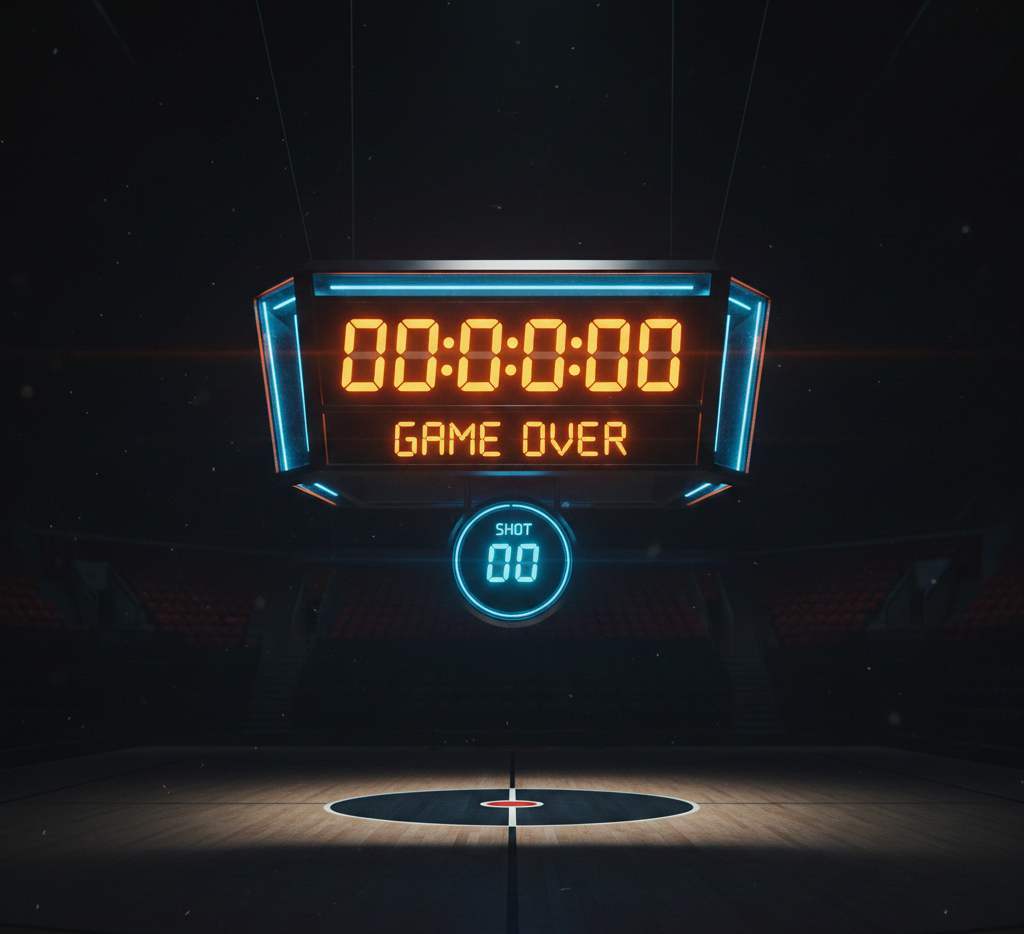
If you’ve watched a basketball game, you’ve seen how two clocks quietly guide everything on the court. There’s the game clock, steadily counting down the whole contest, and the shot clock, measuring those short bursts of time where a decision must be made. One keeps moving no matter what. The other can pause, reset, or be adjusted based on what’s happening in the moment.
Life is not all that different.
From the moment you were born, your game clock started. You did not set it, and you cannot see how much time is left on it. Inside that unseen span are your shot clocks—the seasons, opportunities, crises, and assignments that call for your focus right now: a conversation you’ve been avoiding, a dream you’ve delayed, a change you know you need to make. These are your possessions, your chances to do something with the time in front of you.
If you are honest, you have probably lived at times as if your game clock will run forever. Most people do. We quietly assume, “I’ll get serious about that later. I’ve still got time.” But youth does not guarantee a long life. Health does not guarantee another decade. Success does not guarantee another tomorrow. Whether or not you pay attention to it, your time is still ticking down. Ignoring the clock does not stop it. This is not meant to scare you; it is meant to wake you. The uncertainty of when the game ends is what makes how you live so important.
Think of the players who make the most impact. They do not wait until the last few seconds to start playing with urgency. They value every possession. Your life invites you to do the same. That person on your heart today? Reach out. That idea that has lingered in your mind for years? Take one small step toward it. That habit that keeps holding you back? Choose to respond differently today, even if only by one small choice. You cannot control how long your game clock will run, but you do have a say in how you use your shot clocks. The goal is not to frantically do more; the goal is to live more awake.
Scripture speaks directly into this reality:
“Look carefully then how you walk, not as unwise but as wise, making the best use of the time, because the days are evil.”
— Ephesians 5:15–16
One day, your game clock will hit zero. The buzzer will sound, and your time on this side of eternity will be complete. On that day, the question will not be, “How much time did I get?” but, “What did I do with the time I was given?” Consider this a gentle huddle in the middle of the game. You still have time on the clock, or you would not be here.
Take the shot you have been hesitating to take.
Say the words you have been too proud or too afraid to say.
Begin the change you have been postponing for “someday.”
You do not know how many possessions you have left—but you do have this one. Use it well.
“Teach us to number our days carefully so that we may develop wisdom in our hearts.”
— Psalm 90:12 (CSB)

 ThoughtPager