
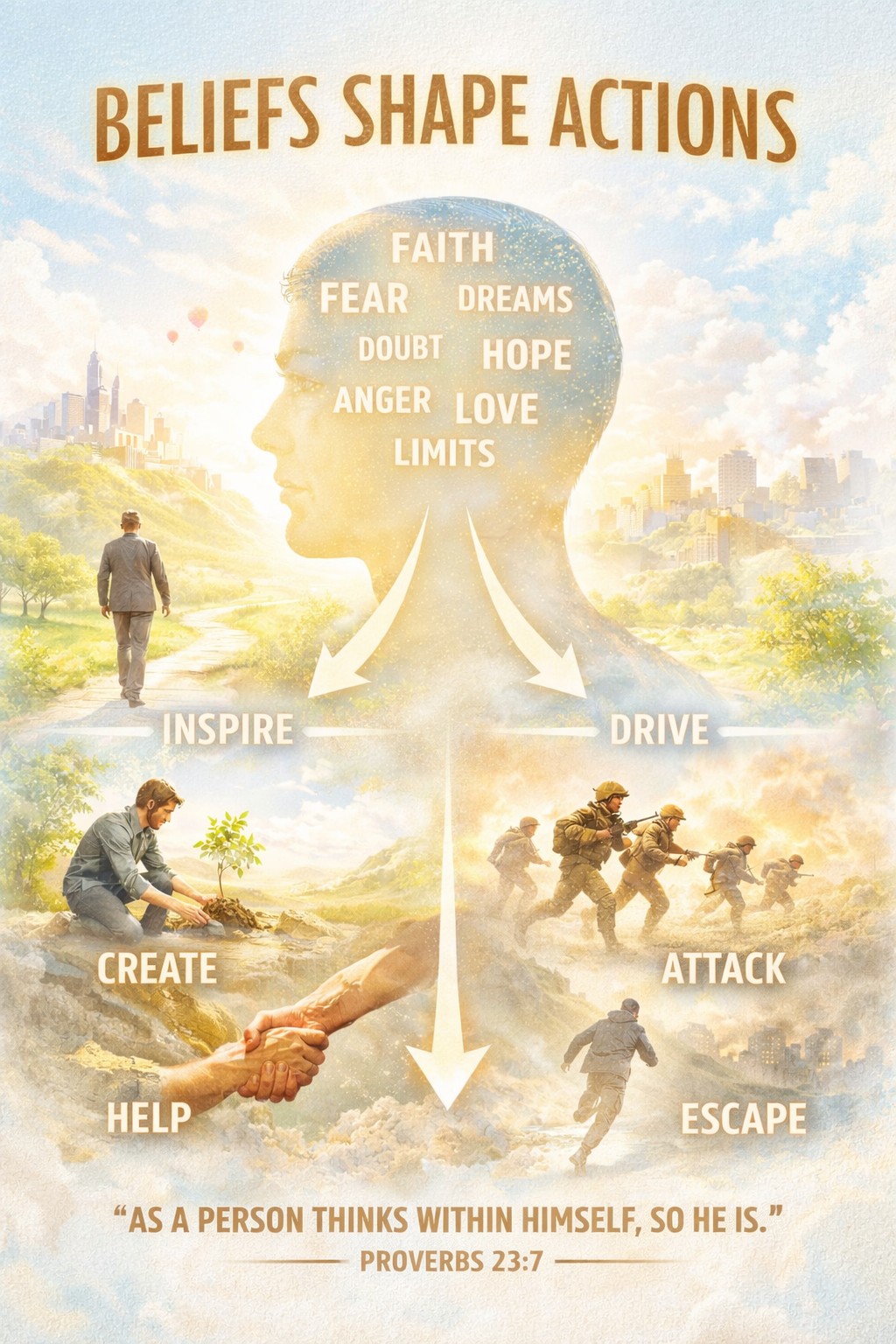
Every life is driven by something. Motivation and discipline get the credit, but beneath your habits, decisions, relationships, and direction lies something deeper:
Your beliefs.
A thought is harmless until you adopt it as true. Once you do, it becomes a belief—and beliefs quietly shape the quality and trajectory of your life.
Belief Drives Behavior
Consider a publishing lesson.
J.K. Rowling’s first book launched in the U.K. as Harry Potter and the Philosopher’s Stone. When preparing it for the U.S., publishers believed American kids would find “philosopher” dull or academic. So they changed one word:
Harry Potter and the Sorcerer’s Stone.
Same story. Same magic. Different belief.
The result? Explosive success in the U.S.
Nothing changed but perception—and perception drove action.
We don’t act on what’s true.
We act on what we believe is true.
Belief Can Reshape History
Belief doesn’t just guide individuals—it moves nations.
In 1967, during the buildup to the Six-Day War, Egypt believed Israel was preparing to attack. Israel believed Egypt was mobilizing to strike first. Neither side had full confirmation. Both acted on belief.
Israel launched a preemptive strike. War followed. The region was reshaped—not by verified facts, but by perceived intent.
Belief can preserve peace or ignite conflict.
Belief Organizes Life
There’s an old song that says:
I believe God,
I believe God,
I believe God just as He said.
What you believe about God organizes everything else—your spiritual posture, mental framework, emotional responses, relationships, and decisions.
The same is true socially. Your beliefs about leadership, loyalty, communication, and trust shape how you show up at home, at work, and in your community. Two people can experience the same event and walk away with different conclusions—not because of the event, but because of the beliefs they brought with them.
Why We Hold On to Beliefs
We don’t cling to beliefs because they’re true. We cling to them because they’re familiar—or useful.
Whether we change often depends on:
- who is asking us to change
- how much we trust them
- whether we believe the change is worth the cost
Advice from Jeff Bezos lands differently than advice from a stranger. A request from someone you love carries more weight than one from a coworker.
Belief is relational. Emotional. Contextual.
Where Beliefs Come From
Beliefs are shaped by upbringing, environment, influencers, trauma, success, fear, goals, and perceived limitations. They don’t appear out of nowhere—they’re formed over time.
And that’s the good news.
Beliefs can be examined.
Beliefs can be challenged.
Beliefs can be upgraded.
Choose Belief on Purpose
If beliefs shape destiny, they deserve intention.
Ask yourself:
- Does this belief expand me or limit me?
- Did I choose it—or inherit it?
- Who would I become if I believed better?
Your life will rise—or fall—to the level of your beliefs.
Choose wisely.
“As a person thinks within himself, so he is.”
— Proverbs 23:7, Christian Standard Bible (CSB)
 ThoughtPager