Certain of Uncertainty

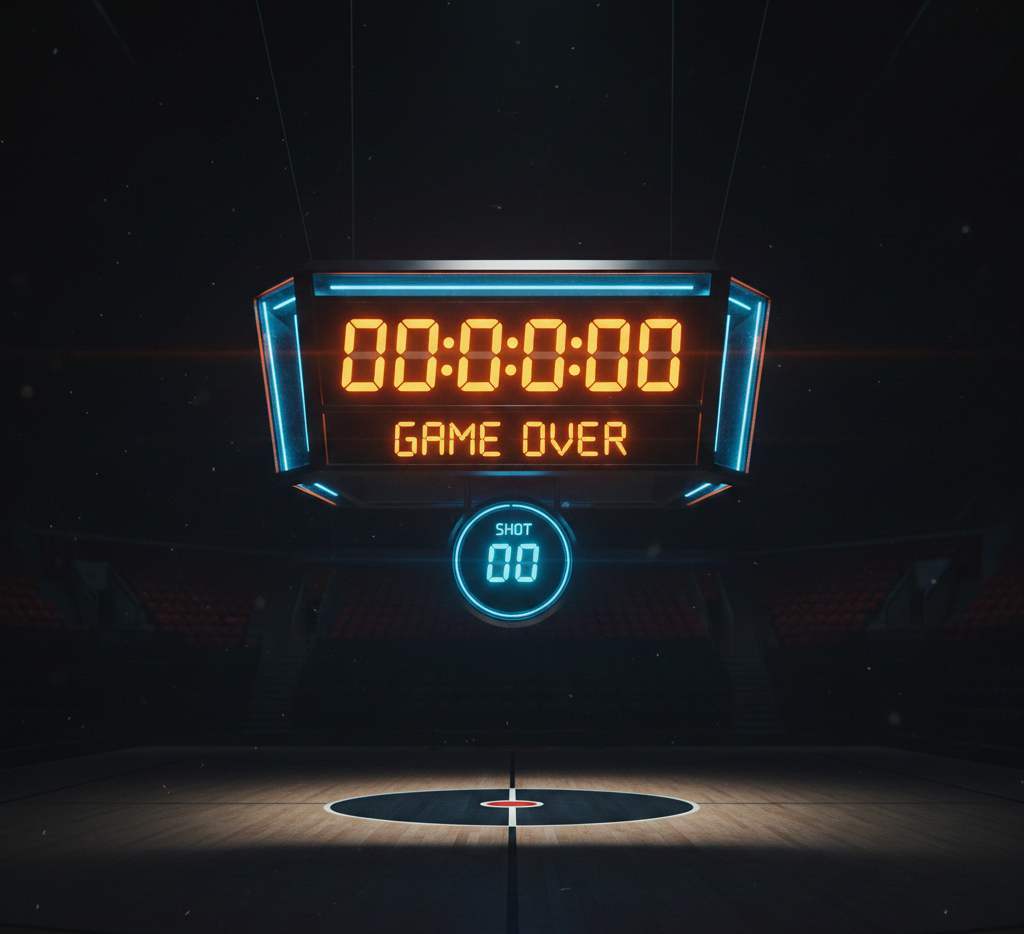
If you’ve watched a basketball game, you’ve seen how two clocks quietly guide everything on the court. There’s the game clock, steadily counting down the whole contest, and the shot clock, measuring those short bursts of time where a decision must be made. One keeps moving no matter what. The other can pause, reset, or be adjusted based on what’s happening in the moment.

Life is not all that different.

From the moment you were born, your game clock started. You did not set it, and you cannot see how much time is left on it. Inside that unseen span are your shot clocks—the seasons, opportunities, crises, and assignments that call for your focus right now: a conversation you’ve been avoiding, a dream you’ve delayed, a change you know you need to make. These are your possessions, your chances to do something with the time in front of you.

If you are honest, you have probably lived at times as if your game clock will run forever. Most people do. We quietly assume, “I’ll get serious about that later. I’ve still got time.” But youth does not guarantee a long life. Health does not guarantee another decade. Success does not guarantee another tomorrow. Whether or not you pay attention to it, your time is still ticking down. Ignoring the clock does not stop it. This is not meant to scare you; it is meant to wake you. The uncertainty of when the game ends is what makes how you live so important.

Think of the players who make the most impact. They do not wait until the last few seconds to start playing with urgency. They value every possession. Your life invites you to do the same. That person on your heart today? Reach out. That idea that has lingered in your mind for years? Take one small step toward it. That habit that keeps holding you back? Choose to respond differently today, even if only by one small choice. You cannot control how long your game clock will run, but you do have a say in how you use your shot clocks. The goal is not to frantically do more; the goal is to live more awake.

Scripture speaks directly into this reality:

“Look carefully then how you walk, not as unwise but as wise, making the best use of the time, because the days are evil.”
— Ephesians 5:15–16

One day, your game clock will hit zero. The buzzer will sound, and your time on this side of eternity will be complete. On that day, the question will not be, “How much time did I get?” but, “What did I do with the time I was given?” Consider this a gentle huddle in the middle of the game. You still have time on the clock, or you would not be here.

Take the shot you have been hesitating to take.
Say the words you have been too proud or too afraid to say.
Begin the change you have been postponing for “someday.”

You do not know how many possessions you have left—but you do have this one. Use it well.

“Teach us to number our days carefully so that we may develop wisdom in our hearts.”
— Psalm 90:12 (CSB)

Remember You

There’s a moment in every person’s life when they realize the biggest obstacle they’ve been fighting isn’t the world, the economy, their upbringing, or even the people around them. It’s the quiet, persistent lie they’ve been telling themselves for years.

And the wild part is this:
You can believe that lie so deeply, so fiercely, that you repeat the same mistake again and again—almost on autopilot. You defend it. You justify it. You wrap it in excuses and call it “just who I am.”

But pause for a second.
Ask yourself something bold and honest:

What exactly are you afraid of losing if you let that belief go?

Because beneath the fear, there’s a truth you already know:
Releasing that belief would make you better. Stronger. Lighter. More aligned with the person you’re trying to become.

So why hold on?

The Lie Feels Familiar—But Familiar Isn’t Freedom

We cling to limiting beliefs because they feel safe. Predictable. They give us a script to follow, even if it’s a script that keeps us small.

But familiarity is not the same as fulfillment.
Comfort is not the same as calling.

Every time you repeat that old story—
“I’m not good enough.”
“I always mess things up.”
“This is just how life is for me.”
“I can’t change.”

—you reinforce a version of yourself that no longer fits the life you’re trying to build.

Letting Go Isn’t Loss—It’s Liberation

Think about what you gain when you release the belief that’s been holding you hostage:

  • Clarity about who you really are
  • Courage to pursue what you’ve been avoiding
  • Confidence to step into new opportunities
  • Capacity to grow into the person your goals require

What you gain is far greater than anything you fear losing.

And the truth is, you’re not losing anything real.
You’re only losing the illusion that kept you from rising.

Remember Your Goals. Remember Your Dreams. Remember You.

Your goals weren’t given to the version of you who hides behind excuses.
Your dreams weren’t designed for the version of you who clings to old stories.
Your future isn’t waiting for the person you’ve been—it’s waiting for the person you’re becoming.

So today, choose to remember yourself.

Remember the you who once believed more was possible.
Remember the you who dared to imagine a bigger life.
Remember the you who refuses to settle for the lie any longer.

Change isn’t the enemy.
Change is the doorway.

And you’re standing right in front of it.

Step through.

You will know the truth, and the truth will set you free.
– John 8:32 (CSB)

Don’t Miss the View

Think about a trip you’ve been dreaming about for years—one of those journeys you’ve imagined down to the smallest detail. You’ve pictured the hotel, the food, the sounds of the streets, the colors of the markets. You’ve researched the culture, the hidden gems, the must‑try dishes. You’ve packed and repacked your luggage, making sure nothing essential is left behind.

By the time you reach the airport, you’re buzzing with anticipation. You arrive early, not because you have to, but because excitement won’t let you sit still at home. The flight is smooth, the service is excellent, and everything feels like confirmation that this trip was meant for you.

Then the plane lands. It taxis toward the terminal. Your heart beats a little faster. The doors open, and you step into the air of the destination you’ve been longing to experience. You inhale deeply… and suddenly you cover your eyes.

Your family and friends stare at you. “What are you doing? Don’t you want to see this new place?”

And you answer, “No… I’m too scared.”

Of course, they’d pull your hands away. They’d insist you look. They’d remind you that this is the moment you’ve been waiting for.

But isn’t this exactly what many of us do when change finally arrives? We dream, plan, hope, and pray for something new—yet when the door opens, we hesitate. We shield ourselves from the very thing we said we wanted.

Change Is the Destination You Manifested

Whether we realize it or not, change is often the arrival of the very things we’ve been manifesting. Our thoughts, beliefs, and desires shape our direction long before our feet ever move. What we focus on—positive or negative—eventually materializes in our lives.

So if the change in front of you doesn’t excite you, it may be worth asking: Have I been manifesting something uninspiring? Have my thoughts been aligned with what I want—or what I fear?

Your current reality is a reflection of what you’ve been rehearsing internally. And the beautiful part is that you can shift that rehearsal at any moment.

Focus Forward, Not Backward

Today, choose to focus on something you want—not what you don’t want. That single shift is a step toward it. Then stay consistent. Stay persistent. Keep moving in the direction of the life you’ve envisioned.

Because here’s the truth: To receive what you’ve been asking for, you must become the person who can hold it. Growth is not punishment—it’s preparation.

Don’t Fight the Change. Welcome It.

Change is not the enemy. It’s the doorway. It’s the jet bridge leading you into the world you’ve been imagining.

You don’t know what adventure, newness, fulfillment, joy, peace, or pleasure is waiting on the other side. But you’ll never find out if you keep your hands over your eyes.

So when life opens the door, step through it with courage. Look around. Take it in. Let the newness greet you.

Your destination is here. Don’t miss the view.

Reflect

“Look, I am about to do something new; even now it is coming. Do you not see it? Indeed, I will make a way in the wilderness, rivers in the desert.” – Isaiah 43:19 (CSB)

The Identity Beneath the Behavior

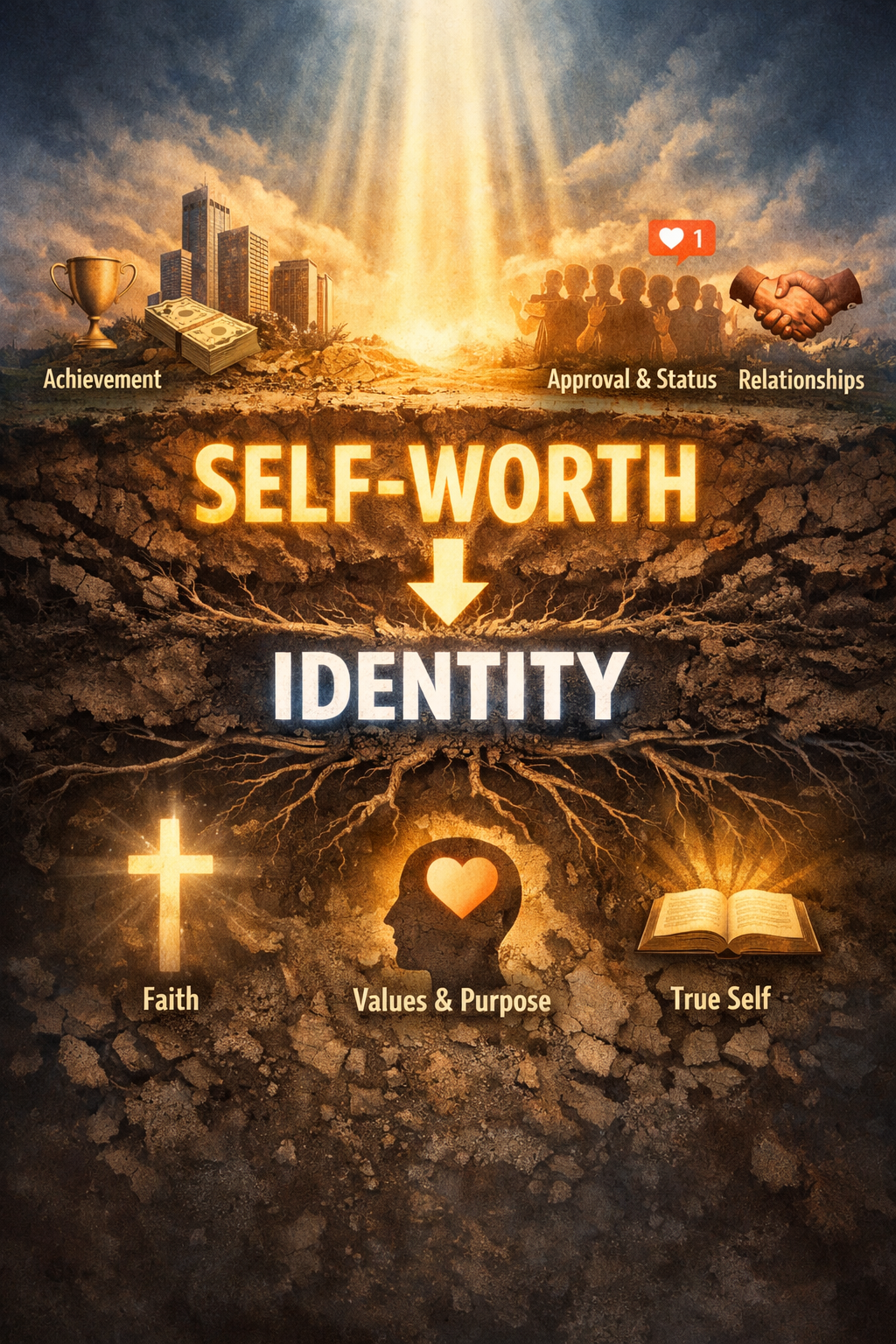
The way we define ourselves isn’t just a personal philosophy—it’s a blueprint that dictates our entire life’s output. If your self-concept is built on sand, your success will always feel like it’s sinking.

To go deeper, we can look to the teachings of T. Harv Eker, who argues that our internal “programming” is the invisible force behind our external reality.


The Invisible Blueprint: Who Is Running Your Life?

We often think our results come from our hard work alone. But Eker teaches a fundamental formula:

P → T → F → A = R

  • P (Programming): Leads to your…
  • T (Thoughts): Which lead to your…
  • F (Feelings): Which lead to your…
  • A (Actions): Which lead to your…
  • R (Results)

If you derive your sense of self from accomplishment, your programming might be set to a “High Achiever” frequency. While this drives results, Eker warns that if your motivation for success comes from a non-supportive root—like fear, anger, or the need to prove yourself—your accomplishments will never actually bring you peace. You are simply a “success” trying to fill a hole that only self-worth can plug.

1. The “Thermostat” of Self-Worth

Eker uses the analogy of a financial thermostat. If your self-concept is set to “I am a $50,000-a-year person,” and you suddenly make $100,000, you will likely find a way to “self-sabotage” back to your comfort zone.

The same applies to our identity. If you don’t believe you are worthy of respect or love without an achievement attached to it, you will subconsciously create conflict or stress to bring your reality back in line with your low internal “worth” setting.

2. When Identities Clash

When you interact with people who derive their identity from money or status, while you derive yours from achievement, you aren’t just speaking different languages—you’re operating on different “Wealth Files.”

Eker points out that “Rich people admire other rich and successful people,” whereas those with a scarcity mindset often resent success in others. If you find yourself in conflict with others, ask: “Am I reacting to them, or is my ‘programming’ being threatened by their ‘programming’?”

3. Rewiring the Self

To move forward, Eker suggests we must “observe” our thoughts rather than “be” our thoughts.

  • Awareness: Notice when you feel your worth is slipping because a goal wasn’t met.
  • Disassociation: Realize that this “need to achieve” is just a program you learned—it isn’t you.
  • Declaration: Re-anchor your identity in your innate value. As Eker says, “No amount of money can ever make you good enough… because you are already enough.”

Reflection

True mastery is being “bigger than your problems.” When your sense of self is grounded in your ability to handle whatever comes, rather than the specific outcome of the day, you become unstoppable.

“For in Him we live, and move, and have our being.” — Acts 17:28