The Relational Trinity

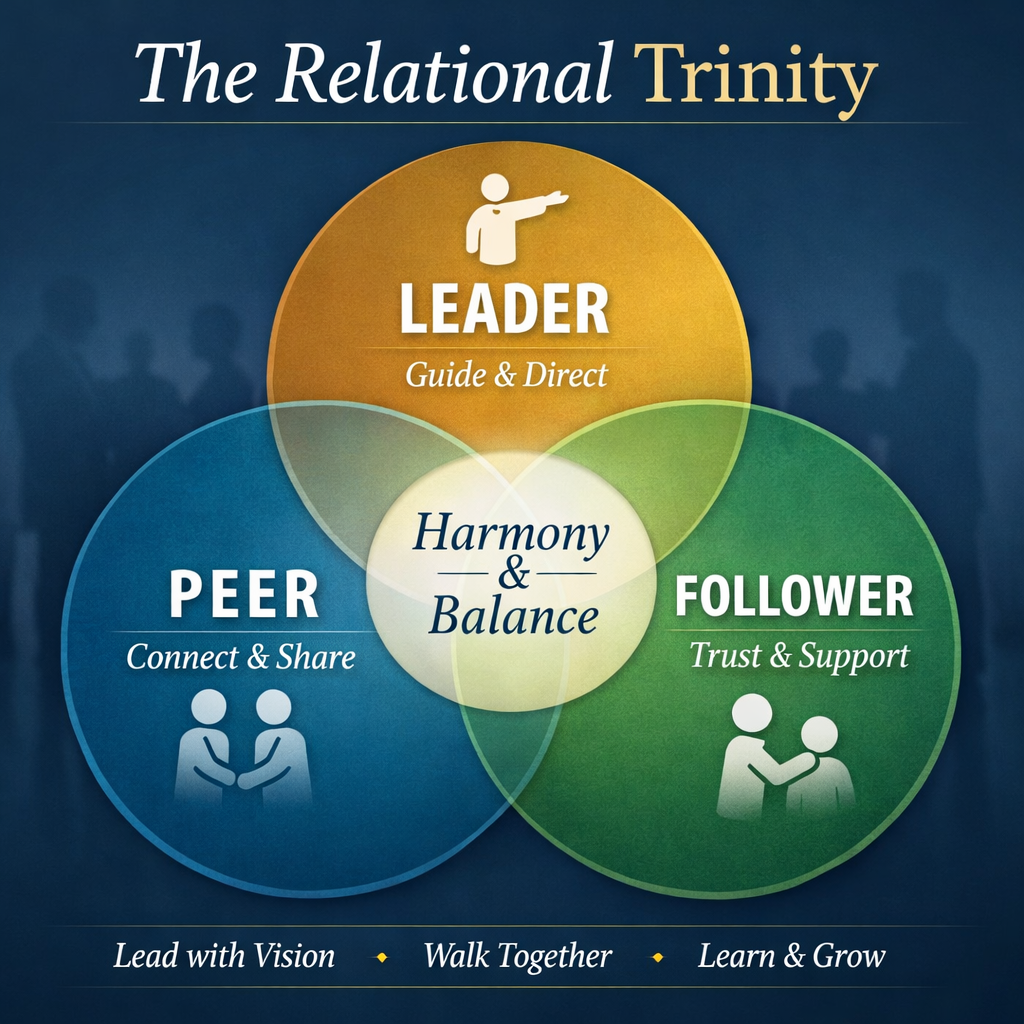
The Relational Trinity is a framework for understanding the three relational realms we inhabit: Leader, Peer, and Follower. Harmony in relationships isn’t about choosing one role; it’s about aligning the realms to create emotional safety and clarity.


1. The Three Relational Realms

  • The Leader Realm (Direction & Structure): Focused on vision, decision-making, and guidance.
    • Examples: Parents, CEOs, mentors.
    • Core need: To provide boundaries and safety.
  • The Peer Realm (Collaboration & Equality): The realm of “we,” where no one is above or below.
    • Examples: Friends, siblings, co-workers.
    • Core need: Shared experience and mutual respect.
  • The Follower Realm (Trust & Teachability): The willingness to be guided and open to growth.
    • Examples: Students, mentees, employees.
    • Core need: Receptivity and humble execution.

2. The Source of Conflict: Misalignment

Tension usually arises from realm confusion rather than personality clashes.

  • Competing Realms: Both people try to lead at once, causing power struggles.
  • Misread Cues: One person seeks a Peer (empathy), but the other responds as a Leader (logic/solutions).
  • The Marriage Exception: Marriage is unique because it requires fluid movement through all three realms daily—leading in finances, following in care, and operating as peers in leisure.

3. Modifiers: Why We Have a “Bent”

Our preference for a specific realm is shaped by upbringing, trauma, personality, and experience. These “modifiers” create our default setting (our “Bent”). Recognizing your bent helps you understand why some roles feel effortless while others feel draining.


4. Path to Relational Harmony

To improve your interactions, practice awareness through these three questions:

  1. What is my “Bent”? Do I naturally default to taking charge (Leader) or deferring (Follower)?
  2. Am I misreading the room? Does this moment require me to guide, to listen as an equal, or to trust someone else’s expertise?
  3. How do my “Modifiers” interfere? Does ego prevent me from following? Does fear prevent me from leading?

The Bottom Line: When we align our realms—matching a Leader with a Follower or a Peer with a Peer—relationships feel like a dance. Understanding these dynamics provides the language to navigate conflict with intention.

“Do nothing out of selfish ambition or conceit, but in humility consider others as more important than yourselves. Everyone should look not to his own interests, but rather to the interests of others.” – Philippians 2:3-4 (CSB)
BELIEFS

Every life is driven by something. Motivation and discipline get the credit, but beneath your habits, decisions, relationships, and direction lies something deeper:

Your beliefs.

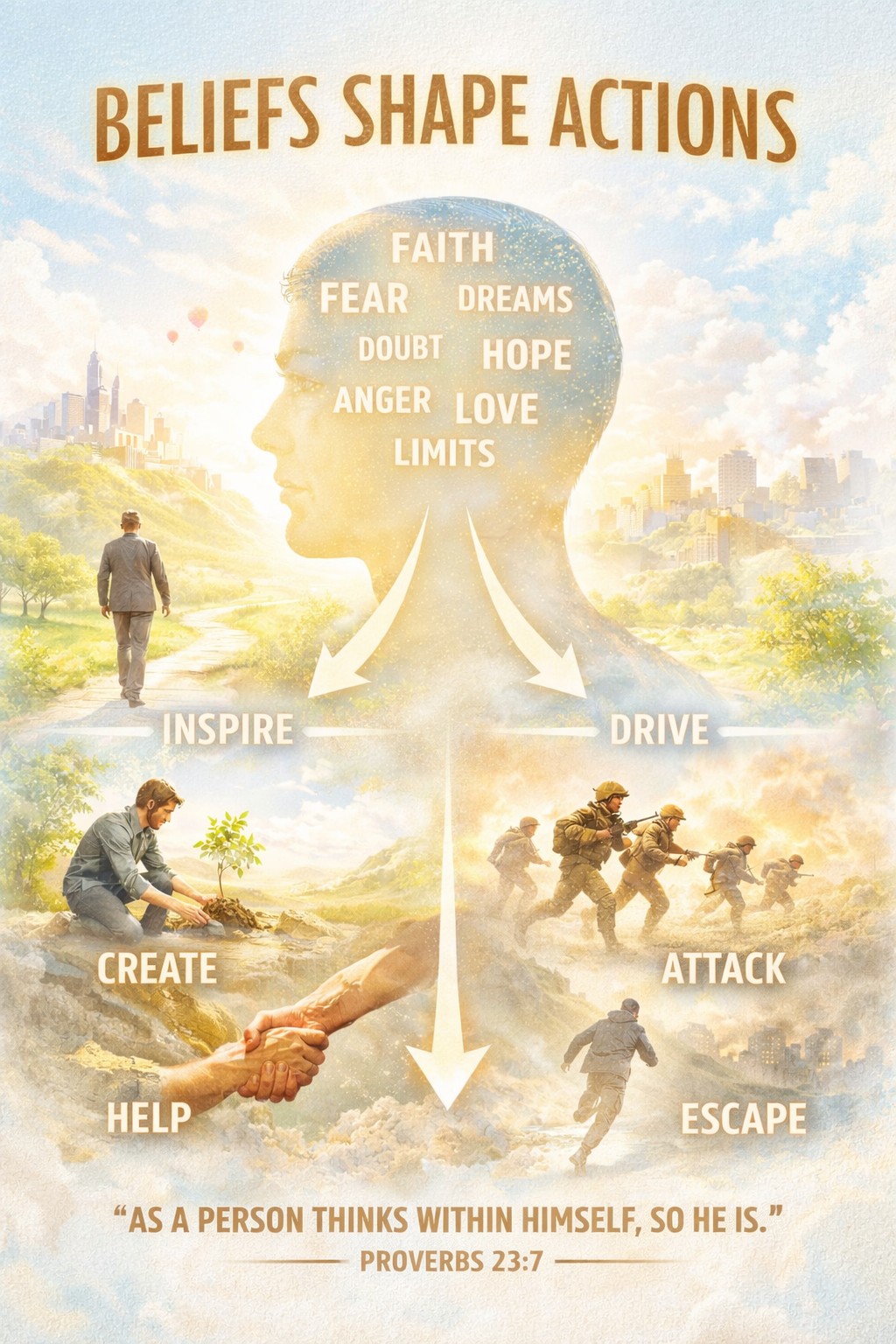
A thought is harmless until you adopt it as true. Once you do, it becomes a belief—and beliefs quietly shape the quality and trajectory of your life.

Belief Drives Behavior

Consider a publishing lesson.

J.K. Rowling’s first book launched in the U.K. as Harry Potter and the Philosopher’s Stone. When preparing it for the U.S., publishers believed American kids would find “philosopher” dull or academic. So they changed one word:

Harry Potter and the Sorcerer’s Stone.

Same story. Same magic. Different belief.

The result? Explosive success in the U.S.

Nothing changed but perception—and perception drove action.

We don’t act on what’s true.
We act on what we believe is true.

Belief Can Reshape History

Belief doesn’t just guide individuals—it moves nations.

In 1967, during the buildup to the Six-Day War, Egypt believed Israel was preparing to attack. Israel believed Egypt was mobilizing to strike first. Neither side had full confirmation. Both acted on belief.

Israel launched a preemptive strike. War followed. The region was reshaped—not by verified facts, but by perceived intent.

Belief can preserve peace or ignite conflict.

Belief Organizes Life

There’s an old song that says:

I believe God,
I believe God,
I believe God just as He said.

What you believe about God organizes everything else—your spiritual posture, mental framework, emotional responses, relationships, and decisions.

The same is true socially. Your beliefs about leadership, loyalty, communication, and trust shape how you show up at home, at work, and in your community. Two people can experience the same event and walk away with different conclusions—not because of the event, but because of the beliefs they brought with them.

Why We Hold On to Beliefs

We don’t cling to beliefs because they’re true. We cling to them because they’re familiar—or useful.

Whether we change often depends on:

  • who is asking us to change
  • how much we trust them
  • whether we believe the change is worth the cost

Advice from Jeff Bezos lands differently than advice from a stranger. A request from someone you love carries more weight than one from a coworker.

Belief is relational. Emotional. Contextual.

Where Beliefs Come From

Beliefs are shaped by upbringing, environment, influencers, trauma, success, fear, goals, and perceived limitations. They don’t appear out of nowhere—they’re formed over time.

And that’s the good news.

Beliefs can be examined.
Beliefs can be challenged.
Beliefs can be upgraded.

Choose Belief on Purpose

If beliefs shape destiny, they deserve intention.

Ask yourself:

  • Does this belief expand me or limit me?
  • Did I choose it—or inherit it?
  • Who would I become if I believed better?

Your life will rise—or fall—to the level of your beliefs.

Choose wisely.

“As a person thinks within himself, so he is.”
Proverbs 23:7, Christian Standard Bible (CSB)

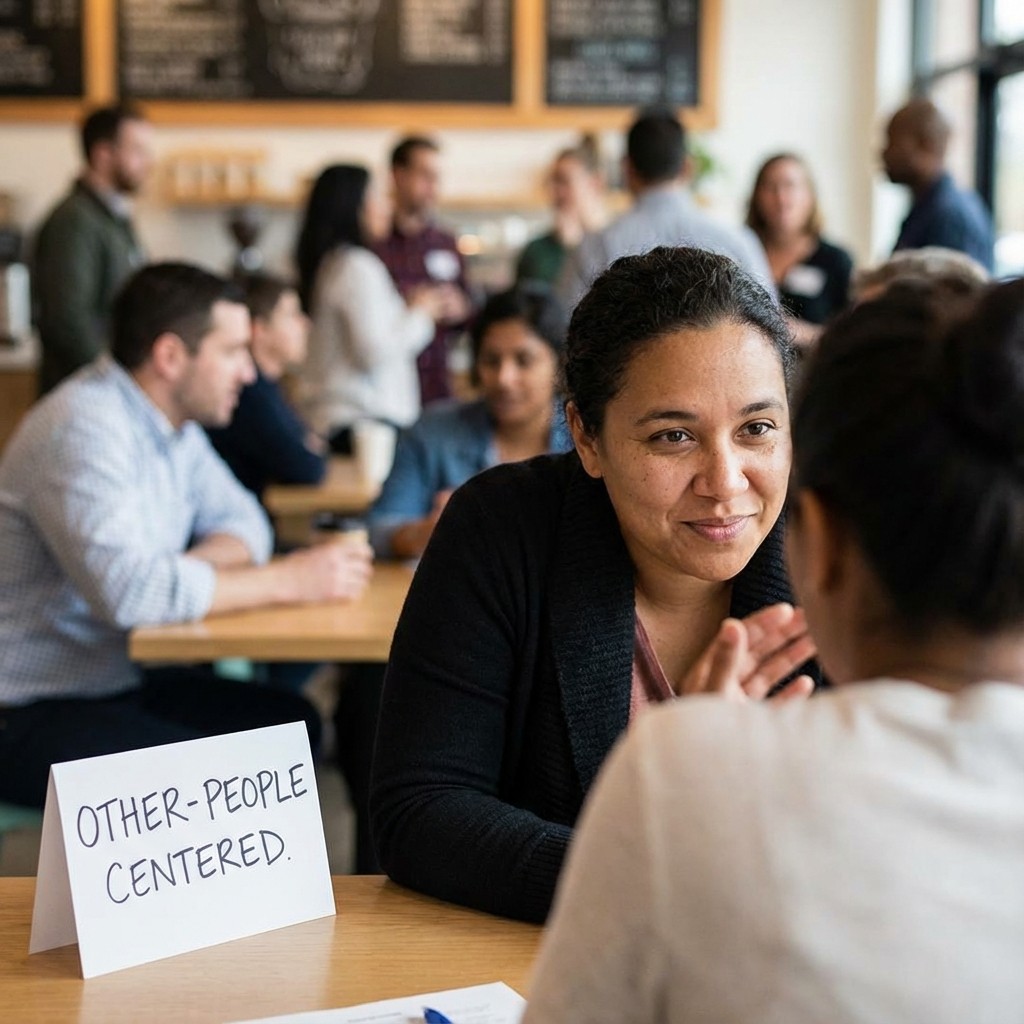
Built To Be People Centered

The Clues Are in Our Instincts

Watch what happens when you connect with someone.

You don’t calculate a smile when you meet someone new—you just smile. You don’t plan laughter when a friend tells a great joke—it spills out. You don’t need instructions to hug your family—you lean in. These gestures aren’t taught. They’re instinctive.

And instincts reveal design.

They point to something profound about how we’re wired: we were built to be people-centered. Connection isn’t optional or learned later—it’s embedded. While modern culture nudges us toward self-focus and accumulation, the satisfaction it promises fades quickly. Compare that to the lasting lift you feel when you encourage someone or make another person’s day better. One disappears. The other compounds.

Zig Ziglar said it best: “You can have everything in life you want, if you will just help enough other people get what they want.” That’s not hype—it’s how life actually works.

Blessing Others Changes Us

Humans thrive when we lift others. Our mood improves. Our stress decreases. Our sense of purpose expands. Even our physical health responds positively to acts of kindness.

Service realigns us. Anxiety loosens. Gratitude grows. Joy shows up—not because we chased it, but because we stopped staring at ourselves long enough to serve someone else. Trust and opportunity tend to follow the same pattern, finding people who consistently add value.

Self-Care Fuels Other-Care

Being people-centered doesn’t mean neglecting yourself. You can’t pour from an empty cup.

Taking care of your body, finances, mental health, and spiritual life increases your capacity to bless others with consistency and generosity. Self-care isn’t the destination—it’s the fuel.

We were built to give, and Scripture reminds us why:

“Do not neglect to do what is good and to share, for God is pleased with such sacrifices.”
— Hebrews 13:16 (CSB)

Care for yourself wisely.
Bless others generously.
Joy tends to follow.

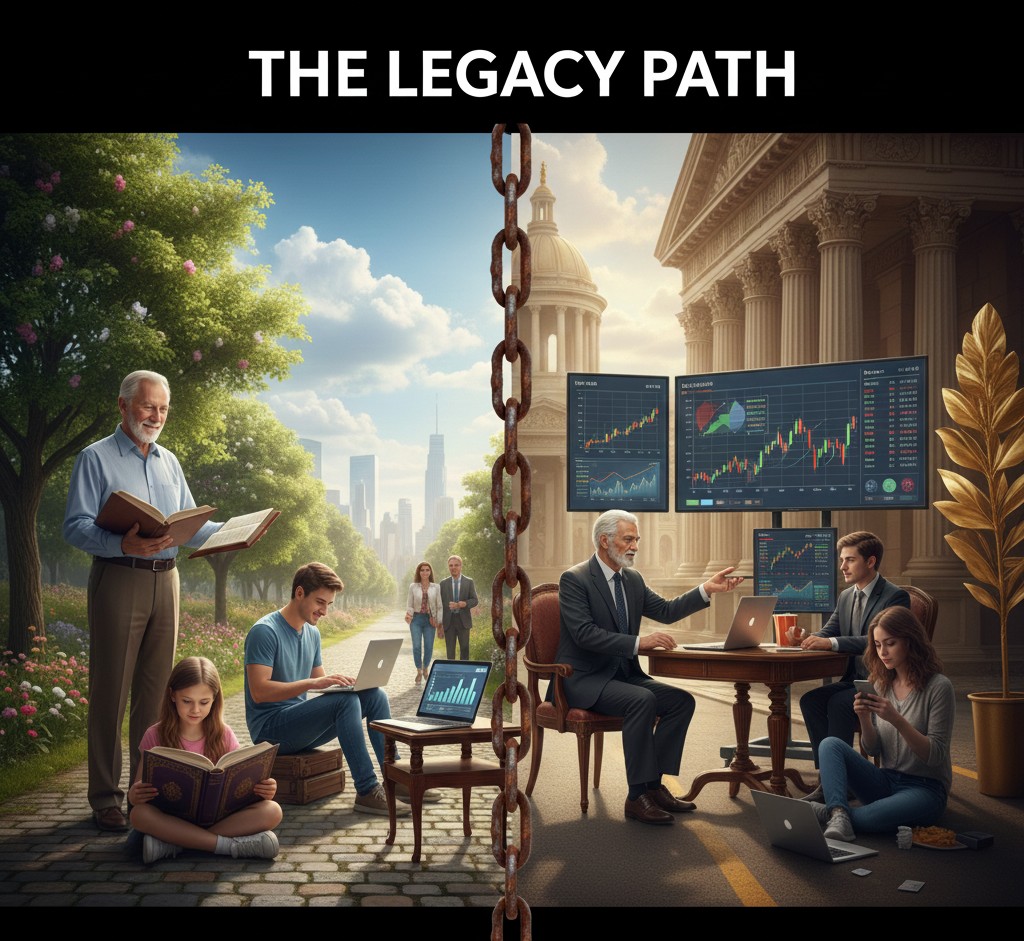
Craft Your Legacy

What does leaving a legacy truly mean to you?

For the Rockefellers, it meant designing a system of wealth stewardship so strong it would empower generation after generation.

For the Kennedys, it meant embedding service into the family DNA—public leadership was expected, not optional.

For the Pharaohs of ancient Egypt, it meant assuming responsibility for an entire nation, believing their reign shaped both history and eternity.


The Echo Effect: Three Generations of Influence

When researchers study intergenerational outcomes, one truth becomes crystal clear: the habits, mindset, and intentional choices of one generation ripple through the next three or four.

  • Families who cultivate discipline, direction, and shared values consistently create children and grandchildren who rise to higher levels of education, income, leadership, and well-being.
  • Families who drift without intention tend to pass on instability, lack of structure, and scarcity thinking—patterns that reinforce themselves unless someone consciously breaks the cycle.

Your daily choices are not just about you. They echo. They transfer. They multiply. Whether for good or for harm, your legacy begins long before anyone writes your obituary. It begins today.


Blueprinting Success: Lessons from Dynasty Builders

Legacy is never an accident. It is engineered through decisions made when no one is watching. Here’s how two iconic families built their enduring influence:

💰 Rockefeller: Engineering Financial Permanence

The Rockefellers were pioneers in treating wealth as a resource to be managed, not merely spent.

  1. A Family Constitution: They created written agreements—values, expectations, conflict-resolution rules, and long-term financial principles—that every generation reviewed and reaffirmed.
  2. A Formal Family Office: They pioneered the modern family office model: centralized professionals managing investments, taxes, trusts, and education for the entire lineage.
  3. Intentional Wealth Education: Each child was taught budgeting, investing, philanthropy, and stewardship from an early age. Wealth was defined as a tool, not a trophy.

🏛️ Kennedy: Cultivating Service and Leadership

The Kennedy legacy is defined by a fierce commitment to public service and intellectual rigor.

  1. A Culture of Public Service: From Joseph Kennedy Sr. onward, the family instilled duty. Law, diplomacy, military service, and public office were seen as noble, expected paths.
  2. Education as a Non-Negotiable: Elite schooling, debating clubs, writing, and political study were core to the Kennedy upbringing. Excellence wasn’t hoped for; it was expected.
  3. Strategic Networking and Mentorship: The Kennedys built and maintained strong alliances in business, government, media, and diplomacy—creating opportunity pipelines that lasted decades.

Your Turn: The Decision Point

Your habits. Your character. Your discipline. Your vision. These are the seeds your children and grandchildren will harvest.

  • Today and tomorrow—choose wisely.

As the Proverb reminds us:

“A good person leaves an inheritance for his grandchildren…” — Proverbs 13:22 (CSB)