Silence Builds Walls

For most of my life, I’ve preferred to keep the waters smooth. If something bothered me, I often chose to let it pass rather than bring it up. It felt easier, safer, and more peaceful to keep certain things to myself.

My wife sees things differently. She’s comfortable addressing issues head-on. Not to create conflict, but because she believes honest conversations lead to understanding. Where I pull back, she leans in.

For a long time, this difference created a pattern: I would hold on to irritations or uncomfortable moments, convincing myself that silence was the best way to keep harmony. But over time I learned something important—unspoken frustrations don’t fade. They settle in the heart and grow heavier.

What I’ve discovered is that avoiding difficult conversations doesn’t create peace. It creates distance. And the very connection I’m trying to protect ends up strained by the things I avoid saying.

When I choose to speak up and share what’s troubling me, three consistent outcomes follow:

  1. Relief — I no longer carry the weight alone.
  2. Respect — My honesty invites her respect, not resistance.
  3. Resolution — Once something is spoken, it can be addressed, understood, or let go.

These moments remind me that honest communication isn’t about confrontation, it’s about care. It’s about giving the relationship an opportunity to grow stronger, rather than letting silence create gaps that neither of us intended.

I’m learning that sometimes the most loving thing I can do is to step into an uncomfortable conversation. Not to accuse, but to share. Not to argue, but to connect. Not to stir conflict, but to prevent resentment from taking root.

And in those moments, the peace I was trying to protect finally becomes real.


“Better an open reprimand than concealed love.”
— Proverbs 27:5 (CSB)

I Must Work

There’s a phrase that has echoed through generations: “I must pray like it depends on God and work like it depends on me.” It captures a profound truth—faith and action are not opposites, but partners. Prayer aligns our hearts with God’s will, but work is the vessel through which His blessings flow.

The critical part of this truth is simple: we must DO something. Faith without works is incomplete. God multiplies effort, but He cannot multiply idleness. The more we step forward, the more He can use us. The more we desire or are entrusted with, the more responsibility we carry to act.

Consider the widow in 1 Kings 17. She had only a handful of flour and a little oil, yet she gave all she had to bake bread for the prophet Elijah. Her offering was small in quantity but enormous in effort and faith. The result? She was blessed with an abundance of oil and flour that sustained her household through famine. Her work, though humble, became the channel for God’s miracle.

Or think of the parable of the talents in Matthew 25. The servants were not praised for simply holding onto what they were given. They were expected to use their talents, to multiply them, to work diligently. The one who buried his talent was rebuked, while those who invested and earned more were rewarded. Notice that those entrusted with more talents carried greater responsibility. God’s expectation scales with His blessings.

The lesson is clear: work is not optional—it is essential. Prayer opens the door, but work walks through it. Effort is the seed, and God provides the harvest. When we act, even in small ways, we invite God to magnify our labor into something far greater than we could imagine.

So let us embrace the call: I must work. Not out of striving for self-glory, but out of obedience, stewardship, and faith. For in our labor, God’s power is revealed.

Scripture to reflect on:

“Whatever you do, work at it with all your heart, as working for the Lord, not for human masters.” — Colossians 3:23

That’s Me

Imagine this moment: you walk into a dealership after weeks—maybe months—of imagining yourself behind the wheel of a certain car. You’ve seen it on the road more often lately, almost as if the universe is conspiring to place it in your path. You circle it slowly, inspecting the curves, the shine, the way the light bends across its surface. You open the door, step inside, and let your eyes wander across the interior with the same careful attention. Finally, you settle into the driver’s seat, hand resting on the wheel. And then, almost involuntarily, your mind and mouth agree on two words:

“That’s me.”

But pause here. Why those words? Why not simply, “This is the car I want”?

Because this car is more than a vehicle. It is a reflection. Its style, its color, its design—these are not just features. They are signals. They mirror your self-concept, your beliefs, your image, the person you want to communicate to the world. In choosing this car, you are not merely selecting transportation; you are declaring identity. You are saying to others, “This is who I am. This is how I want to be seen.”

The Intentional and the Unintentional

Here’s the deeper truth: in life, we are constantly saying “That’s me.” Sometimes intentionally—through choices like the car we drive, the clothes we wear, the words we speak. But often, unintentionally—through habits, attitudes, and behaviors we may not even notice.

Every action, every word, every silence communicates something. And while you may intend to project confidence, kindness, or integrity, others may see impatience, indifference, or inconsistency. The gap between intention and perception is where misalignment lives.

Why Feedback Matters

This is why feedback and accountability are not optional—they are essential. Just as a mirror helps you adjust your appearance before stepping out the door, feedback helps you adjust your actions before they become your reputation. Accountability ensures that what you intend to communicate is what others actually receive.

Without feedback, you risk living in a self-made illusion, believing your “That’s me” moments are aligned when in reality they may be sending a different message. With feedback, you gain clarity. With accountability, you gain alignment.

The Call to Action

So here’s the challenge:

  • Seek mirrors. Invite trusted voices to reflect back what they see in your words and deeds.
  • Listen deeply. Resist defensiveness; feedback is not an attack but a gift.
  • Adjust intentionally. Align your actions with your values so that when you say “That’s me,” it rings true both inside and outside.

The car in the dealership is a metaphor. Life is the real showroom. Every choice you make is a model on display. And when others look at your life, your words, your deeds, they too are asking: “Is that really you?”

Make sure the answer is yes.

“As he thinketh in his heart, so is he.” – Proverbs 23:7 (KJV)

No Muscle

Just say no.”

It’s a phrase indelibly linked to public service campaigns—from Nancy Reagan’s stern warning against drug use to Michelle Obama’s encouragement to young people. It’s a simple, decisive command, and it aims at the big, life-altering decisions.

But I want to offer an insight: the true power of “no” isn’t reserved only for these momentous, life-or-death choices. Its most profound impact is felt in the daily, small decisions we face in our personal and professional lives. These are the choices we often dismiss as insignificant, yet they are the silent architects of our trajectory.

The Tyranny of the Small “Yes”

We are wired to be agreeable. To be team players. To be responsive—to texts, emails, requests for “just 15 minutes” of our time. We fear the awkward silence, the momentary disappointment, or the potential missed opportunity that a “no” might bring.

So, we say yes.

  • Yes, to the extra, non-essential task at work.
  • Yes, to the social engagement we dread.
  • Yes, to the distracting notification on our phone.
  • Yes, to the small detour that is miles off our personal road map.

Each “yes” on a small, non-essential item is a micro-withdrawal from our most precious accounts: time, energy, and focus. Individually, they feel harmless. But stacked up over weeks and months, these small “yeses” create a crushing weight. They dilute our effort, erode our momentum, and ultimately, can lead us down a catastrophic trajectory where we are busy but unproductive, exhausted but unfulfilled, and our brand—our identity and what we stand for—is blurred by a thousand compromises.

Your “No” Muscle: A Necessary Discipline

This is where the concept of the “No” Muscle comes in.

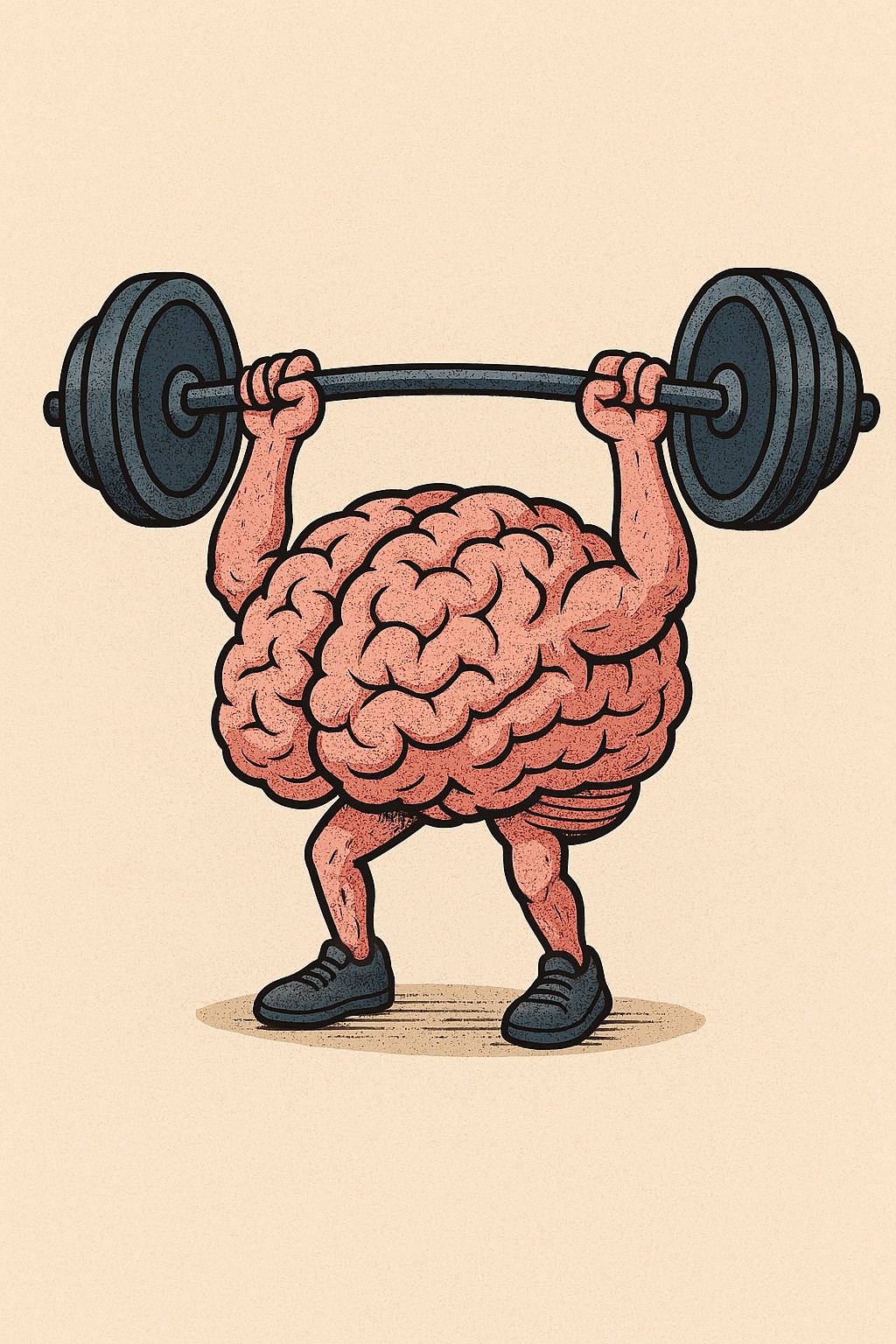
To say “no” when it truly matters—to a toxic influence, a professional over-commitment, or a habit that drains your soul—requires strength. And like any muscle, that strength must be developed through practice. If you haven’t built the discipline of declining the small, distracting, and non-essential things, you will have no strength—no muscle—to utter that decisive word when the stakes are high.

Practice makes stronger. Start today by recognizing that saying “no” to one thing is saying “yes” to another.

  • Saying no to an unnecessary meeting is saying yes to focused work.
  • Saying no to a distracting notification is saying yes to presence and clarity.
  • Saying no to a request that doesn’t align with your goals is saying yes to integrity and your own mission.

Build that muscle by starting small. Be selective about your time. Guard your energy as your most valuable asset. Recognize that your calendar is not a suggestion box; it is the ledger of your life, and you are the only one who can truly authorize the debits and credits.

The strength to say “no” is not rudeness; it is self-respect. It is not a denial of others; it is an affirmation of self. Start flexing that muscle today, and watch as your trajectory straightens, your energy reserves replenish, and your momentum becomes unstoppable.


A Word of Guidance

The internal discipline required to maintain a focused life is the true work of the heart. The Bible speaks to this vigilance:

“Above all else, guard your heart, for everything you do flows from it.”

(Proverbs 4:23, NIV)

This “guarding” is the active, continuous process of building your “No” Muscle—protecting the source of your thoughts, intentions, and actions from the countless small distractions that seek to drain its vitality.

The Science of Stamina

Think of your mind as a muscle you train in the gym. The process of building it is rooted in a simple but profound scientific principle: Stress, Adaptation, and Supercompensation.

  1. The Stress (The Challenge): When you lift a heavy weight, you are intentionally creating tiny tears, or micro-traumas, in the muscle fibers. This is a controlled stress. In your professional life, this is the difficult project, the challenging negotiation, or the trial that pushes you beyond your comfort zone. It’s the moment of effort, and yes, sometimes pain.
  2. The Adaptation (The Healing): The magic happens after the effort, during recovery. Your body doesn’t just repair those micro-tears; it adapts. The muscle fibers grow back thicker and stronger than before to ensure they can better handle that same stress next time.
  3. Supercompensation (The Increased Capacity): The result of this cycle of deliberate stress and quality recovery is supercompensation—a new, higher baseline of strength and capacity.

Scientifically, when you engage in endurance-based training, your muscle fibers increase their mitochondrial content (the “powerhouses” of your cells) and capillary density (better blood flow and oxygen delivery). This allows the muscle to be more fuel-efficient and resist fatigue for longer.

Your mental capacity works the same way. By intentionally engaging with challenges, reflecting on them (the mental ‘recovery’), and building new coping mechanisms, you are increasing your “mental mitochondria.” You are optimizing your mind to:

  • Utilize resources more efficiently.
  • Delay the onset of mental fatigue.
  • Handle greater and more prolonged loads.

The trials and adversity you face today are not punishments; they are your training sessions. They are deliberately making you more resilient. They are building the capacity and endurance you will need to handle the next, greater test, trial, and opportunity. Don’t avoid the weight; embrace the lift.


As you commit to this process of strengthening your capacity, remember this source of wisdom and encouragement:

“Not only so, but we also glory in our sufferings, because we know that suffering produces perseverance; perseverance, character; and character, hope.”Romans 5:3-4 (NIV)