
There’s a moment—maybe you’ve felt it—when your spouse does something seemingly small, and irritation flares up like a match. You know it’s not catastrophic, but it still stings. And worse, it feels like they’re amused by your reaction. You wonder: Is this intentional? Why does this bother me so much?
If you’ve found yourself stuck in this loop, you’re not alone. But here’s the truth: irritation is rarely about the other person. It’s a mirror. And when we learn to read that mirror, we reclaim our peace.
🌊 The Ripple Effect
Irritation often arises when:
- We feel unheard or disrespected.
- Our expectations aren’t met.
- We interpret behavior as mockery or provocation.
But here’s the twist: irritation is a reaction, not a requirement. It’s a choice—often unconscious—that we can learn to interrupt.
🪞 The Pond Metaphor
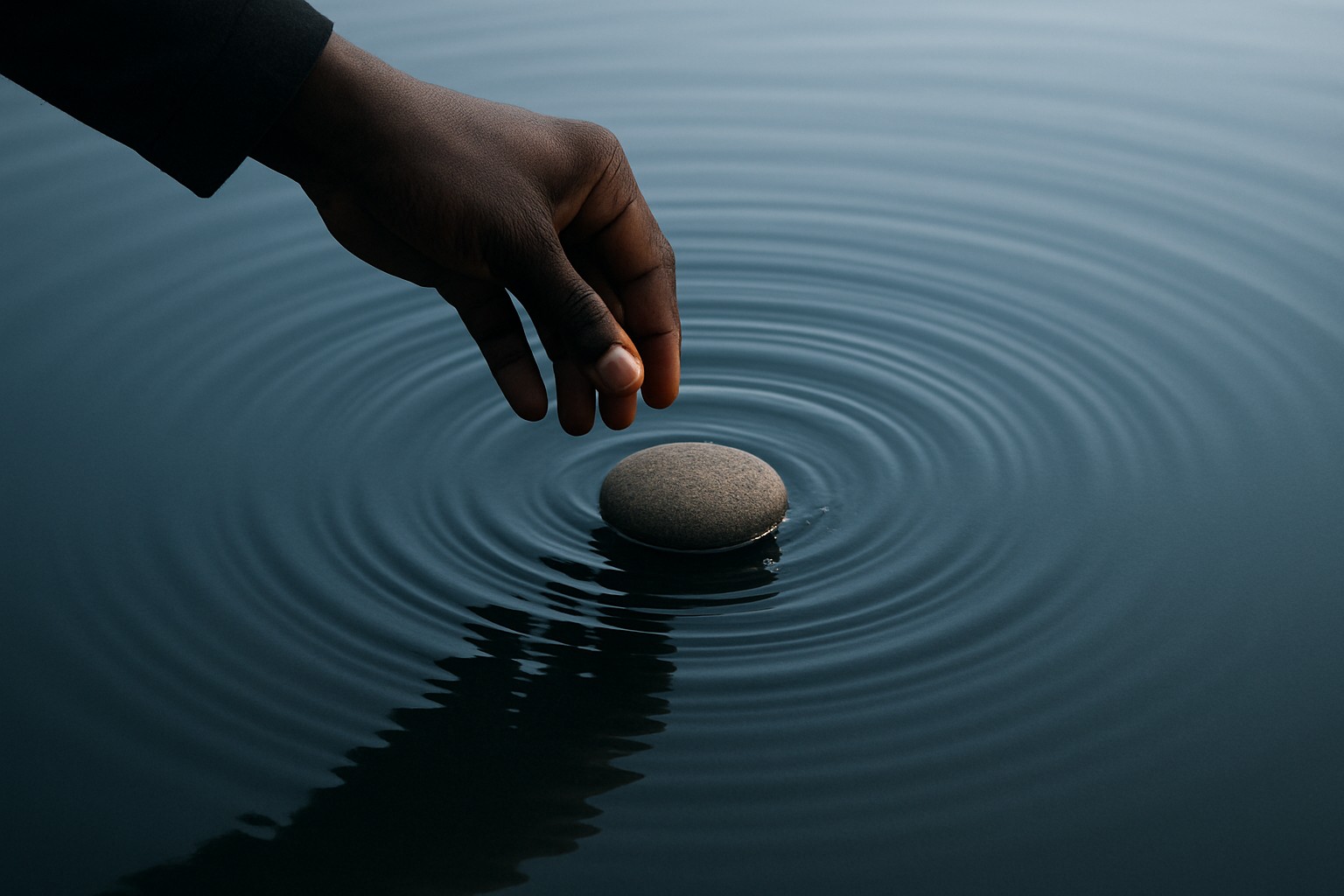
Imagine your emotional state as a still pond—calm, reflective, serene. When someone tosses a stone (a triggering action), it creates ripples. But the stone doesn’t control the pond. You do.
If your spouse seems entertained by your irritation, it may not be cruelty—it may be confusion, deflection, or even a misguided attempt at connection. Either way, your reaction is yours to own.
🧘♂️ How to Stop Feeding the Ripples
Here are five strategies to reclaim your calm and shift the dynamic:
1. Name the Pattern Without Blame
Instead of saying, “You always try to irritate me,” try: “I notice I get irritated when this happens. I want to understand it better.”
This opens the door to dialogue, not defensiveness.
2. Practice the Pause
Before reacting, take a breath. Literally. A 3-second pause can interrupt the automatic loop and give your wiser self a chance to speak.
3. Reframe the Intent
Ask yourself: What else could this mean? Could your spouse be seeking attention, playfulness, or testing boundaries? Reframing softens the sting.
4. Strengthen Your Inner Shoreline
Not every stone deserves a ripple. Build emotional boundaries that protect your peace. Affirm: I choose how I respond. My pond is mine to tend.
5. Invite Connection, Not Combat
Sometimes irritation is a cry for deeper intimacy. Try saying: “I want us to feel more connected. Can we talk about what’s underneath this pattern?”
🌱 Legacy Over Ego
As someone who teaches financial legacy, I’ve learned that emotional legacy matters just as much. The way we respond in moments of tension shapes the emotional climate our children inherit.
So next time irritation knocks, ask: Am I building a legacy of reaction or reflection?
You have the power to choose peace, even when provoked. And in that choice, you model strength, wisdom, and love.
“A gentle answer turns away wrath, but a harsh word stirs up anger.” — Proverbs 15:1 (NIV)
 ThoughtPager