Put Down the Ducky

When I was a boy growing up in Trinidad, the rhythm of my afternoons was set by the familiar jingle of Sesame Street. Among the colorful characters and catchy tunes, one moment etched itself into my memory—a quirky, profound lesson wrapped in feathers and melody. A singing owl once coached Ernie, the lovable puppet, on how to play the saxophone. But Ernie, ever attached to his rubber ducky, kept squeezing it while trying to play. The result? A cacophony of squeaks and missed notes. The owl’s advice was simple yet powerful: “You got to put down the ducky if you want to play the saxophone.”

Eventually, Ernie got it. He let go of the ducky, and suddenly, the music flowed. The saxophone sang. The interruption was gone. And in that moment, a child’s show delivered a timeless truth: You cannot embrace your calling while clinging to your comfort.

🐤 What’s Your Ducky?

We all have our duckies. They’re not always toys. Sometimes they’re habits, relationships, mindsets, or even identities we’ve outgrown. They’re the things we clutch because they’re familiar—even when they sabotage our progress. We say we want to play the saxophone of purpose, impact, and legacy, but we refuse to release the rubber ducky of distraction, fear, or ego.

  • The entrepreneur who won’t delegate because control feels safer.
  • The parent who clings to guilt instead of grace.
  • The investor who won’t pivot because the old model feels “known.”
  • The visionary who keeps dimming their light to fit into someone else’s comfort zone.

We squeeze our duckies, and wonder why our music sounds off.

🛑 The Courage to Release

Letting go isn’t easy. The ducky is soft. It’s comforting. It’s been with us for years. But it’s also the very thing muffling our melody. To play the saxophone of your life—to truly step into your calling—you must release what no longer serves you.

This isn’t just about productivity. It’s about identity. It’s about choosing growth over nostalgia. It’s about trusting that what’s ahead is more harmonious than what’s behind.

And now I ask you: What ducky do you need to put down today? Is it a toxic habit? A limiting belief? A fear of failure? Whatever it is, know this: your saxophone is waiting. Your melody is ready. But your hands must be free. Put down the ducky.

📖 Scripture to Seal the Message

“Let us throw off everything that hinders and the sin that so easily entangles. And let us run with perseverance the race marked out for us.” —Hebrews 12:1 (NIV)


Push Past the End

Most people stop when they reach the goal. They hit the mark, check the box, and coast. But what if the real transformation — the kind that builds legacy, mastery, and momentum — happens after the supposed finish line?

Grant Cardone’s 10X rule challenges us to aim ten times higher than our original goal. Not just to hustle harder, but to expand our capacity. When you train for 10X, you don’t just reach farther — you become someone capable of sustaining greatness.

This principle shows up everywhere:

  • 🏃‍♂️ In athletics, sprinters are coached to run through the finish line, not to it.
  • ⛳ In golf, the swing doesn’t end at contact — it follows through with intention.
  • 💼 In business, the most successful entrepreneurs don’t stop at “launched” — they push into scale, impact, and legacy.

But what about the invisible finish lines we set in our minds?

For me, the night had become a psychological wall. I’d sabotage my evenings with food or drink, not out of hunger, but avoidance. The day was over. The night was the end. And so I escaped — from the pressure, the uncertainty, the next day’s demands.

Until I reframed it.

I started thinking of the next morning as the true finish line. Suddenly, the night wasn’t a place to indulge — it was a bridge to something greater. That small shift helped me preserve my energy, my discipline, and my peace.

This is the power of mental reframing.

Sometimes, the obstacle isn’t the task — it’s the timing, the context, the story we tell ourselves about where the end lies. And when we move the end just a little farther, we often find the strength to keep going.

So ask yourself:

  • Where have you drawn a finish line too soon?
  • What habit, goal, or relationship needs a new frame?
  • What would happen if you pushed past the end?

Whether it’s your finances, your health, your spiritual walk, or your legacy — the next level is often just beyond the place you’ve been calling “done.”

📖 Anchoring Truth

“Let us not grow weary in doing good, for at the proper time we will reap a harvest if we do not give up.” — Galatians 6:9

When Irritation Ripples: How to Reclaim Your Peace in Marriage

There’s a moment—maybe you’ve felt it—when your spouse does something seemingly small, and irritation flares up like a match. You know it’s not catastrophic, but it still stings. And worse, it feels like they’re amused by your reaction. You wonder: Is this intentional? Why does this bother me so much?

If you’ve found yourself stuck in this loop, you’re not alone. But here’s the truth: irritation is rarely about the other person. It’s a mirror. And when we learn to read that mirror, we reclaim our peace.

🌊 The Ripple Effect

Irritation often arises when:

  • We feel unheard or disrespected.
  • Our expectations aren’t met.
  • We interpret behavior as mockery or provocation.

But here’s the twist: irritation is a reaction, not a requirement. It’s a choice—often unconscious—that we can learn to interrupt.

🪞 The Pond Metaphor

Imagine your emotional state as a still pond—calm, reflective, serene. When someone tosses a stone (a triggering action), it creates ripples. But the stone doesn’t control the pond. You do.

If your spouse seems entertained by your irritation, it may not be cruelty—it may be confusion, deflection, or even a misguided attempt at connection. Either way, your reaction is yours to own.

🧘‍♂️ How to Stop Feeding the Ripples

Here are five strategies to reclaim your calm and shift the dynamic:

1. Name the Pattern Without Blame

Instead of saying, “You always try to irritate me,” try: “I notice I get irritated when this happens. I want to understand it better.”

This opens the door to dialogue, not defensiveness.

2. Practice the Pause

Before reacting, take a breath. Literally. A 3-second pause can interrupt the automatic loop and give your wiser self a chance to speak.

3. Reframe the Intent

Ask yourself: What else could this mean? Could your spouse be seeking attention, playfulness, or testing boundaries? Reframing softens the sting.

4. Strengthen Your Inner Shoreline

Not every stone deserves a ripple. Build emotional boundaries that protect your peace. Affirm: I choose how I respond. My pond is mine to tend.

5. Invite Connection, Not Combat

Sometimes irritation is a cry for deeper intimacy. Try saying: “I want us to feel more connected. Can we talk about what’s underneath this pattern?”

🌱 Legacy Over Ego

As someone who teaches financial legacy, I’ve learned that emotional legacy matters just as much. The way we respond in moments of tension shapes the emotional climate our children inherit.

So next time irritation knocks, ask: Am I building a legacy of reaction or reflection?

You have the power to choose peace, even when provoked. And in that choice, you model strength, wisdom, and love.

“A gentle answer turns away wrath, but a harsh word stirs up anger.”Proverbs 15:1 (NIV)

Just Like the Birds

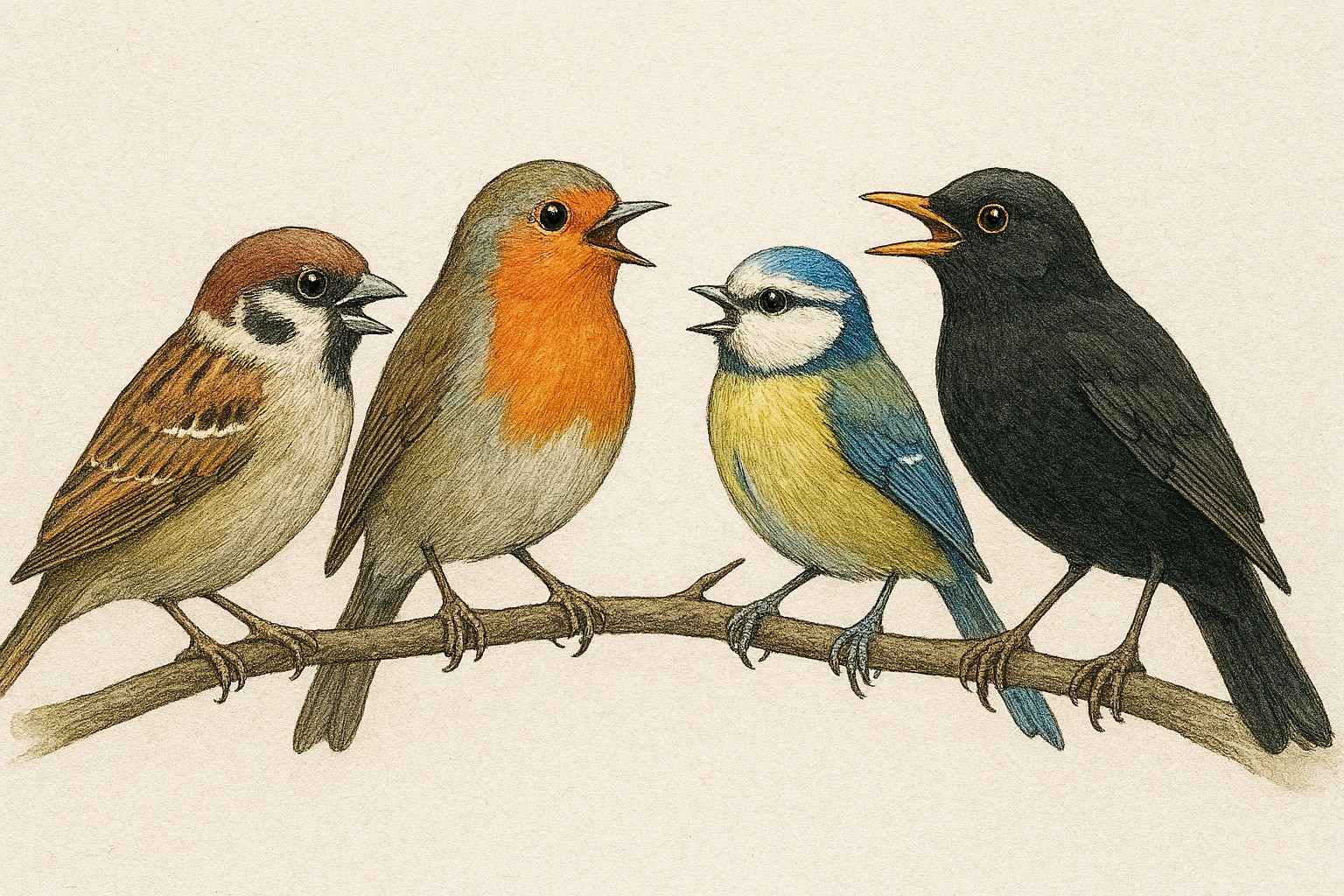
One morning recently when I stepped outside my front door, I was greeted by the cheerful sound of birds chirping from a nearby electrical structure. They were carrying on like old friends catching up—some arriving, some departing, and others just settling in. For a few minutes, it was a flurry of feathers and chatter, and then, just as suddenly as they had gathered, they all flew away together.

As I watched, it struck me: those birds, and countless others across the world, are alive today because they’ve been provided for. Every worm, seed, and scrap they need to survive is somehow there, every single day. They don’t stockpile pantries or stress about tomorrow’s meals—yet they thrive. Almighty God sees to it that even these small creatures are cared for.

If He cares that much for the birds, how much more will He take care of you and me?

“Consider the birds of the sky: They don’t sow or reap or gather into barns, yet your heavenly Father feeds them. Aren’t you worth more than they?” — Matthew 6:26 (CSB)