
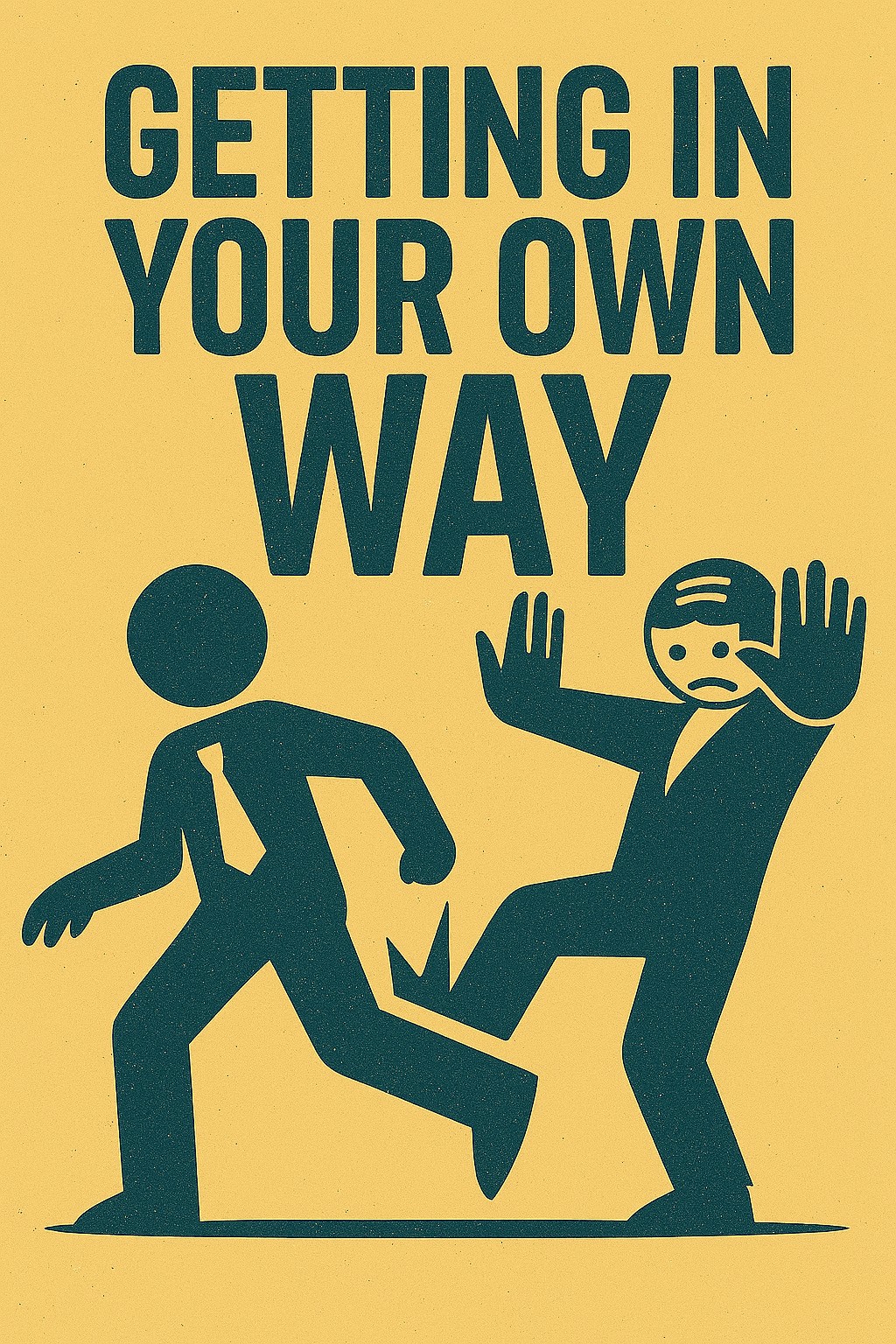
Understanding the hidden psychology behind self-sabotage and reclaiming your path to growth
We’ve all been there—setting goals with clarity and conviction, only to find ourselves doing the very things that derail our progress. Whether it’s procrastinating, overspending, or avoiding the hard conversations, self-sabotage feels like a betrayal of our own intentions. But it’s not random. It’s a signal.
Here’s what’s really going on beneath the surface—and how to break the cycle.
1. Fear of Success and Change
Progress demands transformation. It asks us to shed old identities and step into new ones. But change—even good change—can feel threatening. Sabotage is often a way of clinging to the familiar.
2. Imposter Syndrome
When we don’t believe we’re worthy of the success we’re pursuing, we unconsciously act in ways that confirm that belief. It’s a self-fulfilling prophecy rooted in doubt.
3. Emotional Avoidance
Growth requires discomfort—discipline, vulnerability, effort. Sabotage is often a shortcut to avoid those feelings. It’s easier to scroll, spend, or distract than to face what’s hard.
4. Addiction to Immediate Gratification
Our brains are wired for dopamine. Quick hits of pleasure—junk food, impulse buys, social media—can override long-term goals. Sabotage often feels good in the moment, even if it costs us later.
5. Loyalty to Old Stories
Some of us carry generational or cultural narratives that glorify struggle. Sabotage can be a way of staying loyal to those stories, even when they no longer serve us.
🔄 How to Break the Pattern
- Name the Emotion: Before you sabotage, pause. Ask: What am I feeling right now? What am I afraid of?
- Reframe the Identity: Instead of “I always mess up,” try “I’m learning to show up differently.”
- Create Rituals, Not Just Goals: Habits anchored in meaning are harder to sabotage.
- Practice Compassion: Sabotage isn’t a sin—it’s a signal. Treat it with curiosity, not shame.
Self-sabotage isn’t proof of failure. It’s proof that something deeper needs healing. When you understand the roots, you can rewrite the story—and reclaim your progress.
“I do not understand what I do. For what I want to do I do not do, but what I hate I do.”
-Romans 7:15 (NIV)
 ThoughtPager
Great blog!
Pingback: Why We Sabotage What We Want Most | Restored People Community